Best Cavity Wax UK 2026: Injection Kits for Sills and Box Sections
Table of Contents
Most of the rust that kills a British car starts where you cannot see it: inside the sills, the box sections, the door bottoms and the chassis legs. A good cavity wax, pushed in properly with a long lance, is the cheapest insurance a car can have. Here are the waxes and injection kits worth buying in the UK, and the one we would reach for first.
Why Cavities Rust First
Box sections were designed to be stiff, not dry. Water gets in through drain holes, door seals and window channels, condensation forms every time the temperature swings, and road salt rides in on the spray. Inside, the steel often has little more than a thin coat of primer, and nobody washes it or looks at it. By the time a bubble appears on the outside of a sill, the inside has usually been rusting for years.
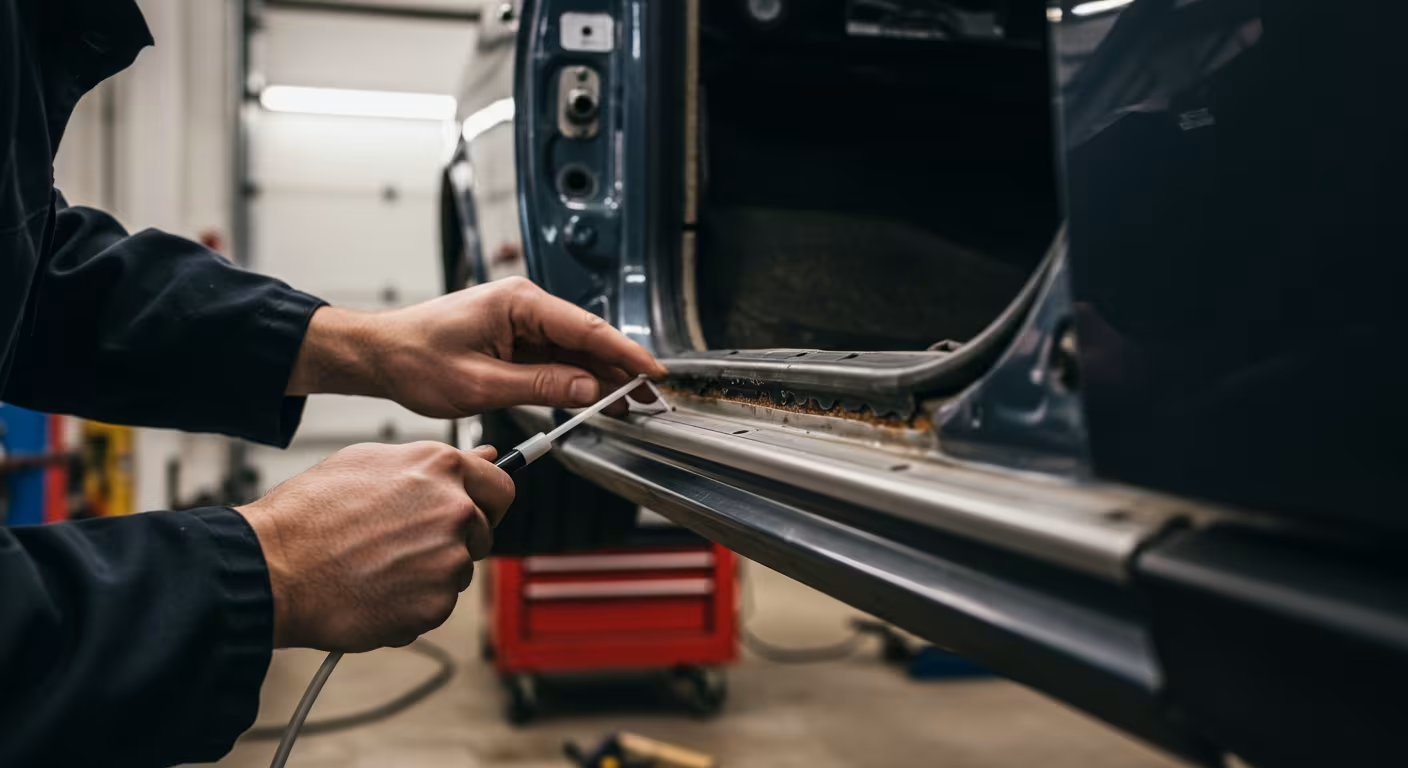
Cavity wax deals with that by coating the inside surfaces with a soft, water-repellent film that never fully hardens. It creeps into seams and spot-weld flanges, displaces moisture and keeps air off the steel. On a classic it is the single most effective thing you can do after the welding is finished, and on a newer car it tops up factory wax that thins out with age.
How Cavity Wax Works
Every product here is a corrosion-inhibiting wax carried in a solvent. You spray it in thin, the solvent evaporates, and what is left is a waxy film. The differences that matter are how thin it goes on and how much wax stays behind.
Penetrating waxes
Low-viscosity waxes such as Dinitrol ML are almost oil-thin when sprayed. They wick into overlapping seams, pinch welds and the gaps behind brackets by capillary action, and soak into light surface rust. The trade-off is a thinner final film, so they suit seams and door bottoms best and are often followed by a heavier wax.
High-solids waxes
High-solids waxes such as Dinitrol 3125HS leave much more wax behind once the solvent has gone. They build a thicker, drip-resistant film on the floor of a sill or chassis leg, which is where standing water and debris collect. They penetrate tight seams less readily than a thin wax.
All-rounders
Waxoyl sits between the two. It is the product most British owners know, it is sold everywhere, and it does both jobs reasonably well as long as it is warmed and applied generously.
Wax, not bitumen, inside cavities
Never put bitumen underseal or stone chip coating inside a box section. Those coatings set firm, can crack, and trap water against the steel. Inside a cavity you want a soft wax that stays mobile, can be topped up, and lets the drain holes do their job.
How We Chose
We have not run a salt-spray cabinet test on these products. Instead we shortlisted every cavity wax and injection kit listed on Amazon UK in November 2026, then ranked them on:
- Owner ratings and review volume together, so a 4.6 from 259 owners counts for more than a 5.0 from three
- What the product is: penetrating or high-solids wax, film type and colour, from the manufacturer's own description
- Lance reach: whether it comes with an extension tube, and how long
- Pack size for one car: about 1 to 2 litres treats the sills, box sections and doors of a typical small classic
- Reputation among UK restorers, and the recurring points in owners' reviews
Where a point below comes from owners' reviews rather than from the product's specification, we say so. Prices are those we saw on Amazon UK at the time of writing and will move.
Two well-regarded waxes are not on this list because they are not sold on Amazon UK: Bilt Hamber Dynax S50, a very good penetrating wax sold direct by Bilt Hamber with its own lance, and Lanoguard, a lanolin-based alternative. Both are worth a look if you are happy to buy from the maker.
The Best Cavity Waxes and Kits
1. Dinitrol ML Penetrating Cavity Wax (2 x 500ml) - Best Overall
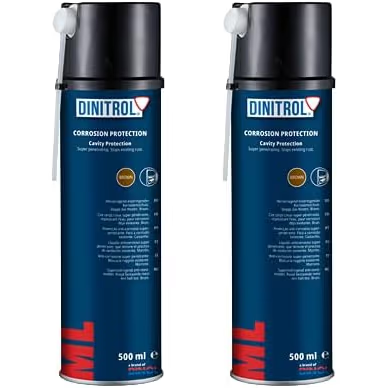
Price seen: £28.99 for 2 x 500ml aerosols
Type: Penetrating cavity wax, brown
Application: Aerosol with extension tube
Dinitrol ML is the wax restorers reach for when they want it to get everywhere. It goes on very thin, wicks into seams and spot-weld lines, and dries to a soft brown film. It has the best combination of rating and review count of any cavity wax on Amazon UK, and owners' reviews keep coming back to the same word: capillary action. Two cans is a realistic amount for the sills, doors and rear quarters of a small car.
Pros:
- Very low viscosity, so it creeps into seams and flanges that thicker waxes miss
- Highest number of owner ratings of any dedicated cavity wax on Amazon UK
- Brown colour makes it easy to see where it has reached through an access hole
- Owners report a little goes a long way
- Also sold in 1 litre cans for use with a wax injector gun
Cons:
- Thin film on its own; for sill floors you will want a thicker wax on top
- Some owners find it extremely runny, so expect drips from drain holes for a day or two
- Dearer per litre than Waxoyl
Our Verdict: The best first coat for any cavity. If you only buy one cavity wax, buy this and be generous with it. For gun users, the same wax comes in a 1 litre Schutz-style can.
Buy on Amazon2. Dinitrol 3125HS High-Solids Cavity Wax (4 x 500ml + 600mm lance) - Best for Sills and Box Sections
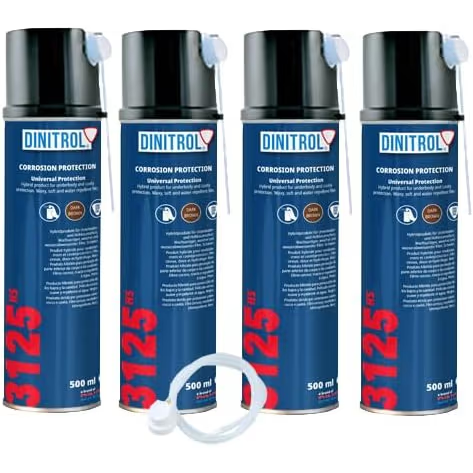
Price seen: £90.00 for 4 x 500ml aerosols, 90mm straw and 600mm extension lance
Type: High-solids wax for cavities and underbody, dark brown
Application: Aerosol with 600mm lance
Where ML is thin, 3125HS is thick. Dinitrol describes it as a hybrid product for underbody and cavity protection that leaves a waxy, soft, water-repellent film, and the high solids content means far more wax stays behind on the floor of a sill, where water and dirt sit. This pack includes the 600mm extension lance, which is the piece that makes the job possible: one owner who treated the chassis legs and sills of a 45 year old car says the lance reached everywhere and its 360 degree spray covered all round.
Pros:
- Thick, drip-resistant film that stays put on sill floors and in chassis legs
- 600mm lance with a 360 degree tip included
- Can also be used on the underside, so leftover cans are not wasted
- Owners rate it highly for coverage, several against Waxoyl
- Four cans is enough for a thorough job on a small to medium car
Cons:
- Fewer reviews than ML or Waxoyl
- Highest outlay on this list
- Thicker wax can block a cold lance; owners advise warming the cans first
Our Verdict: The right second coat for sills, box sections and chassis legs, and the pick if you want one pack that includes a proper lance. A two-can pack with extension nozzle is also listed for smaller jobs.
Buy on Amazon3. Hammerite Waxoyl Clear 400ml Aerosol - Best Known and Easiest to Find
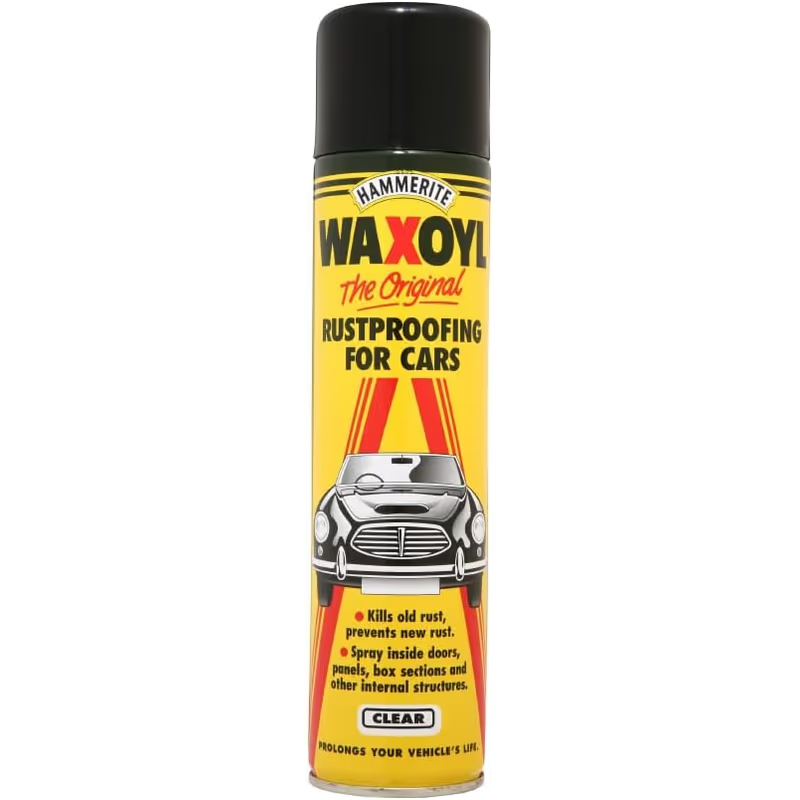
Price: See Amazon for today's price (400ml aerosol)
Type: All-round wax rustproofer, clear to light yellow
Application: Aerosol with slot-in tube
Waxoyl has been protecting British cars since the 1970s and it is still the name most owners know. The aerosol comes with a slot-in tube for spraying through access holes, and Hammerite lists door insides, sills, box sections and the boot floor among its uses. It has by far the most ratings of anything here, and owners say it is easy to apply and leaves a protective coating without being overly messy.
Pros:
- Most ratings of any product in this guide, with a solid 4.5 average
- Sold almost everywhere, so easy to top up
- Works on cavities and underbody, so one product covers small jobs
- Owners rate it well for value for money
Cons:
- Several owners report the nozzle blocking during use
- The supplied tube is short compared with a proper cavity lance
- Less penetrating than Dinitrol ML in tight seams
- Creamy yellow colour divides opinion where it shows
Our Verdict: A dependable all-rounder for door bottoms and quick top-ups, and the one you can buy today in any motor factor. For a full cavity treatment on a restored shell, the Dinitrol pair does a more thorough job.
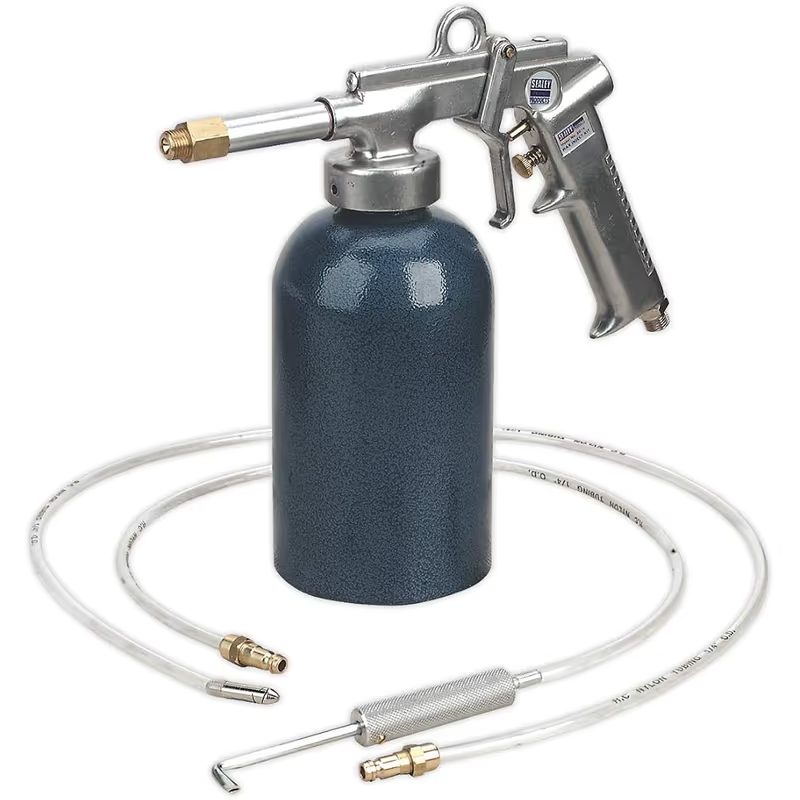
Buy on Amazon4. Sealey SG18 Air Operated Wax Injector Kit - Best Injection Kit
Price: See Amazon for today's price
Type: Compressed-air wax injector gun with lances
Air supply: 70 to 80 psi, 15 cfm stated
If you are treating a whole shell, aerosols get expensive fast. The SG18 is an air-operated gun that sprays wax from a pot through a choice of lances sized for small access holes, so you can buy wax by the litre. One reviewer who runs a Dinitrol rustproofing agency says that while it will not outlast their £450 professional gun, it is well up to car restoration in a home workshop and hard to beat for the price.
Pros:
- Much cheaper per litre than aerosols on a full car
- Supplied with lances for spraying through small access points
- Works with Dinitrol ML, 3125HS or Waxoyl bought in litre cans
- Owners rate it as good value for money
Cons:
- Needs a compressor that can keep up with a stated 15 cfm
- Mixed reports on build quality, including the sealing washer
- Wax not included; clean the gun after use or it will gum up
Our Verdict: The sensible choice once you are past a couple of cans per car. Check your compressor first; our air compressor guide covers what a home workshop can realistically run.
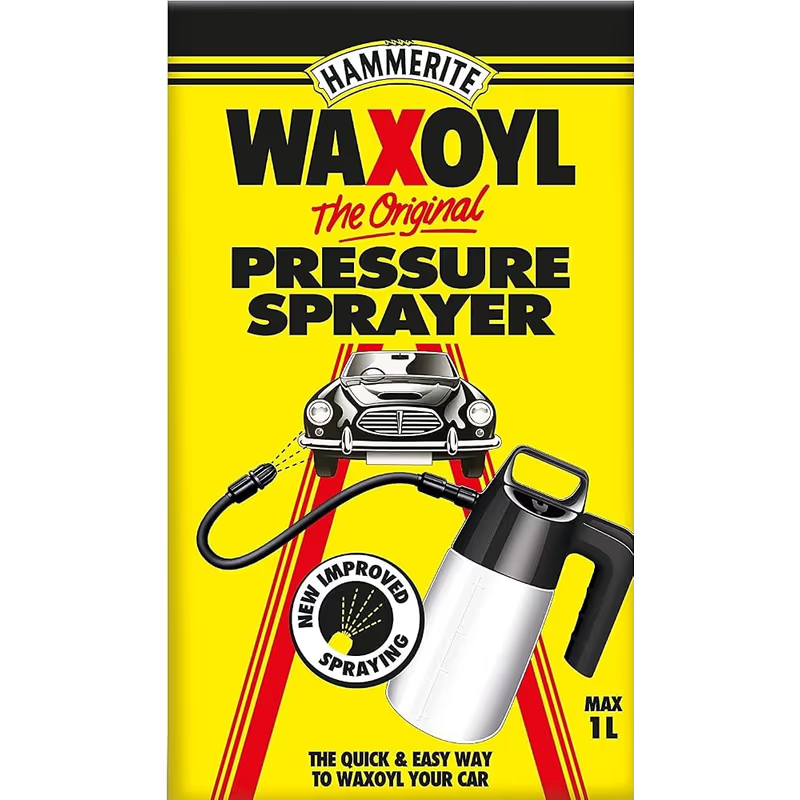
Buy on Amazon5. Waxoyl High Pressure Sprayer Kit - Best Without a Compressor
Price seen: £45.79
Type: Hand-pumped pressure sprayer with three attachments
Air supply: None needed
Hammerite's own sprayer is pumped by hand, so it works anywhere. It comes with a standard nozzle, an extended nozzle for spraying upwards under the car, and an extension probe for injecting wax into closed cavities. It is the only way to apply bulk Waxoyl without an airline, but owners' reviews are genuinely mixed.
Pros:
- No compressor needed
- Includes a cavity probe as well as underbody nozzles
- Lets you buy Waxoyl in 1 litre or 5 litre cans
- Owners find it easy to use, and Hammerite has replaced faulty parts
Cons:
- Lowest rating on this list; several owners report jets blocking and a poor spray
- Needs thorough cleaning after every use
- Wax must be warm to spray properly
Our Verdict: Worth it only if you have no compressor and want to buy wax in bulk. Warm the Waxoyl, clean the jets as you go, and keep aerosols to hand for awkward spots.
Buy on AmazonComparison Table
| Product | Amazon rating | Type | Application | Best for |
|---|---|---|---|---|
| Dinitrol ML | 4.6 (259) | Penetrating wax | Aerosol | Seams, door bottoms, first coat |
| Dinitrol 3125HS | 4.8 (24) | High-solids wax | Aerosol + 600mm lance | Sills, box sections, chassis legs |
| Waxoyl Clear aerosol | 4.5 (770) | All-round wax | Aerosol + tube | Quick top-ups, easy to find |
| Sealey SG18 | 4.5 (63) | Injector gun | Compressed air | Whole-shell treatment |
| Waxoyl Pressure Sprayer | 4.1 (255) | Hand-pump sprayer | Manual pressure | Bulk wax without a compressor |
Buying Guide
Thin first, thick second
The most thorough approach is two products: a penetrating wax to get into the seams, then a high-solids wax over it for film thickness. That is why Dinitrol ML and 3125HS sit at the top of this list. If you want one product only, choose the penetrating wax; a thin film where it matters beats a thick film that never reached the seam.
Lance reach matters more than the wax
The best wax in the world does nothing if it lands 20cm inside the drain hole. Sills, chassis legs and rear quarters on most classics need 500 to 600mm of lance, ideally with a 360 degree nozzle so it coats all four walls. Short straws are fine for door bottoms and not much else.
How much do you need?
As a rough guide, a small classic needs around 1 litre for sills, doors and box sections, and a larger saloon or estate closer to 2 litres. Owners regularly say they went through more than they expected, so buy one more can than you think.
Aerosol or gun?
Aerosols are simplest for one car and for top-ups. A gun becomes worthwhile when you are doing a whole shell or more than one car, because litre cans cost far less than the same wax in aerosols. Air-fed guns need a compressor with real capacity; hand-pump sprayers do not, but are fussier.
How to Inject Cavity Wax
- Do it warm and dry. Pick a dry day and let the car sit in the warm so the cavities are dry inside. Stand the cans in warm water for ten minutes so the wax atomises and flows.
- Clear the drains. Poke out every drain hole in the sills and door bottoms first. Wax must not block them.
- Find your way in. Use existing access holes, drain holes and trim clip holes. Where there is none, drill a small hole in a hidden spot, prime its edge and close it afterwards with a rubber grommet.
- Test-fire the lance outside the car to check you get an even 360 degree mist, not a jet.
- Push in, then draw back. Feed the lance to the far end of the section, start spraying and pull it back slowly and steadily so the whole inside is coated. Repeat from the other end where you can.
- Penetrating coat, then heavy coat. If you are using two products, let the thin wax settle for a few hours before the high-solids wax goes in.
- Expect drips. Put cardboard down; surplus wax will weep from drain holes for a day or two. Clean overspray off paint with a wax and grease remover while it is fresh.
- Check once a year. An inspection camera through the same holes shows whether the film is intact. Top up bare patches before winter.
Ventilation and fire
Cavity waxes are solvent-borne and flammable while wet. Work with the garage door open, wear a mask and eye protection, and keep wax well away from exhausts, welding and heaters until the solvent has evaporated. Never weld near a freshly waxed section.
Frequently Asked Questions
What is the best cavity wax in the UK?
For most cars, Dinitrol ML is the best place to start: it is thin enough to creep into seams and spot-weld flanges, and it has the strongest rating and review count of the cavity waxes on Amazon UK. Follow it with a thicker, high-solids wax such as Dinitrol 3125HS in sills and box sections, where you want a heavier film that stays put.
Is Waxoyl or Dinitrol better for cavities?
Both are solvent-borne wax corrosion inhibitors and both work. Dinitrol sells two products for the job (ML to penetrate, 3125HS to build a thicker film), while Waxoyl is a single all-rounder that is easier to find in shops. Restorers tend to favour Dinitrol for penetration; Waxoyl is perfectly good if you warm it and apply it generously.
How do you get cavity wax inside a sill?
Through the existing drain and access holes, or a small hole drilled and later sealed with a rubber grommet. Use a long flexible lance with a 360 degree nozzle, push it to the far end of the section, start spraying and draw it back slowly so the whole inside surface is coated. Warm the wax first so it atomises and flows.
How often should cavity wax be reapplied?
Check the cavities once a year with a torch or inspection camera and top up any bare areas. A full re-treatment every two to three years is a sensible rhythm for a car used through UK winters; a dry-stored classic can go longer. Wax that has dried and cracked is no longer protecting the steel.
Can I put cavity wax over rust?
Penetrating cavity waxes are designed to soak into light surface rust and seal it from air and moisture, which slows it right down. They do not repair rust that has eaten through the metal. Remove loose scale where you can reach it, and cut out and weld anything that has holed before you wax.
Do I need a compressor to apply cavity wax?
No. Aerosols with extension lances are fine for one car. A compressor-fed wax injector gun is faster and cheaper per litre if you are treating a whole shell, and it pushes the wax further, but it needs a decent air supply.
Conclusion
For most owners the best cavity wax is Dinitrol ML, followed by Dinitrol 3125HS in the sills and box sections, applied warm with a long 360 degree lance. Waxoyl remains a perfectly sound choice when you need something today, and an injector gun pays for itself once you are treating a whole car. Whichever you choose, the lance and the patience to draw it back slowly do more for the result than the label on the can.
For the outside of the floor and arches, see our companion guide to the best underbody seal and wax, and for the method behind both, read our waxing and sealing guide.