Waxing & Sealing: Complete Guide to Vehicle Rust Prevention
Table of Contents
In the UK's damp climate, proactive rust prevention through waxing and sealing is one of the most effective ways to protect your vehicle's longevity. This comprehensive guide covers everything from cavity waxes to underbody sealants, with practical application advice for British drivers.
Why Waxing and Sealing Matter in the UK
The combination of frequent rainfall, winter road salt, and coastal sea spray makes the UK particularly challenging for vehicle rust prevention. Modern vehicles have improved corrosion resistance compared to older models, but they're still vulnerable, especially in areas where moisture can become trapped.
Preventative waxing and sealing create protective barriers that keep moisture and corrosive substances away from metal surfaces. When properly applied, these treatments can add years to your vehicle's life and significantly reduce the need for expensive repairs.
Types of Protection: Understanding Your Options
There are several types of protective treatments available, each designed for specific areas of your vehicle:
Cavity Waxes
These low-viscosity, penetrating waxes are designed to flow into enclosed spaces like door panels, sills, and box sections. They displace moisture, form a protective barrier, and often include corrosion inhibitors for added protection.
Underbody Sealants
Thicker, more robust coatings designed to protect the vehicle's underside from road debris, salt spray, and moisture. These range from rubberized coatings to wax-based products depending on the level of protection needed.
Clear Waxes and Sealants
Used on exterior painted surfaces, these provide a protective barrier while enhancing appearance. While primarily applied for aesthetic reasons, they also provide a first line of defense against environmental contaminants.
Dinitrol vs. Waxoyl vs. Bilt Hamber
The UK market features several established brands with different approaches to rust prevention:
- Dinitrol: A professional-grade system from Sweden, widely used by specialists and OEMs. Known for long-lasting protection and comprehensive product range.
- Waxoyl: A well-established UK brand with accessible products for both DIY and professional use. Particularly known for its cavity wax products.
- Bilt Hamber: A British manufacturer with innovative formulations developed specifically for the UK climate. Highly regarded in the restoration community.
Cavity Waxing: Protecting Hidden Areas
Cavity waxing is particularly important in the UK as it protects the internal areas of your vehicle where rust often begins unnoticed. These enclosed spaces can trap moisture from condensation, particularly during the dramatic temperature changes common in British weather.
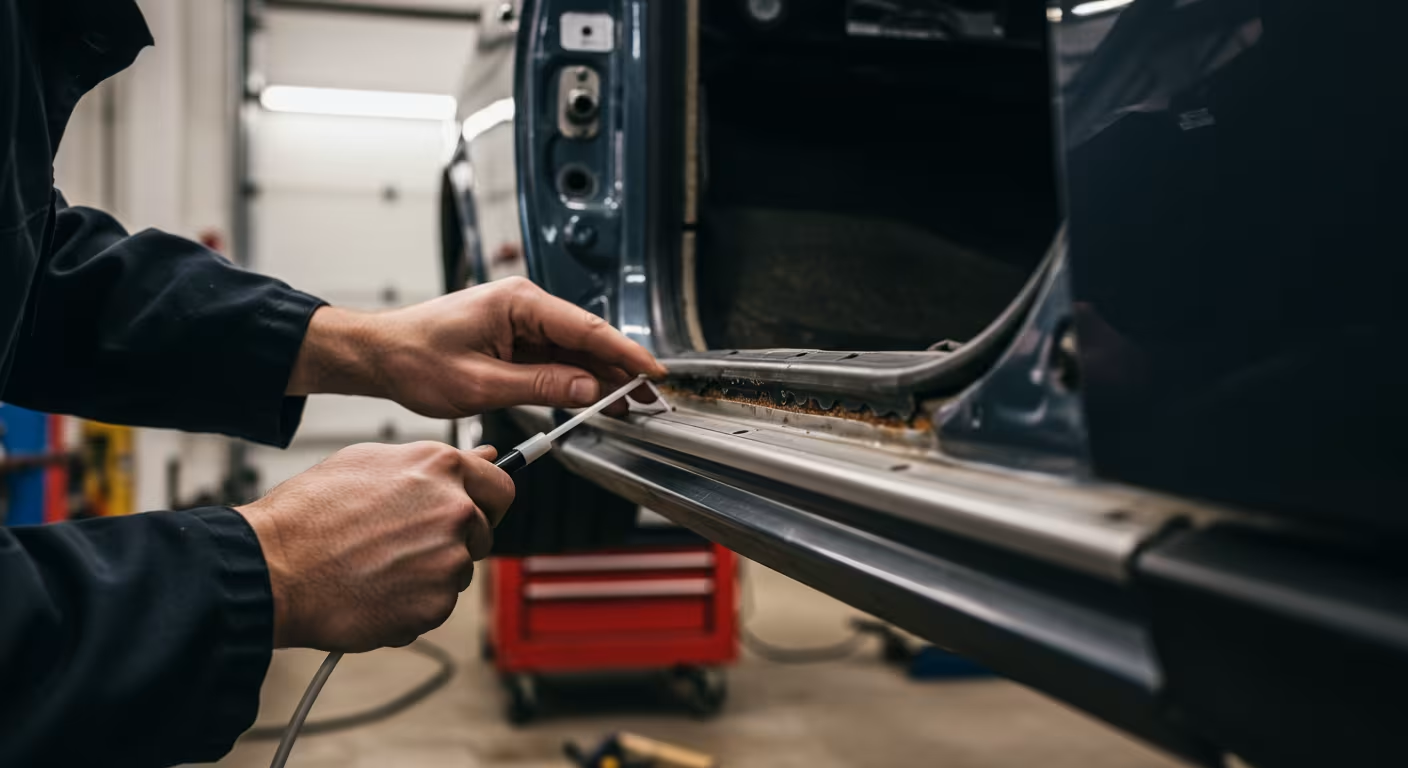
Key Areas for Cavity Wax Application
- Door shells and sills
- Box sections and chassis rails
- A, B, and C pillars
- Boot/trunk lid and bonnet/hood internals
- Subframe mounting points
- Rear quarter panels
Best UK Products for Cavity Protection
Several products excel in the UK's challenging climate:
- Bilt Hamber Dynax S50: Exceptional water displacement with excellent creep properties, making it ideal for UK weather conditions.
- Dinitrol ML: Professional-grade cavity wax with excellent penetration and long-term stability.
- Waxoyl Professional: The traditional UK standard for cavity protection, with good availability and ease of use.
- ACF-50: Originally developed for aircraft protection, now popular for automotive use in coastal regions.
- Fertan Hohlraumversiegelung: German-engineered cavity wax with excellent penetration properties.
Professional Tip
When choosing a cavity wax for UK use, look for products with high water displacement properties (ability to push moisture away from metal surfaces) and creep characteristics (ability to spread into tight seams). These features are particularly important in Britain's damp conditions.
Underbody Sealing: The First Line of Defense
The underside of your vehicle is particularly vulnerable to corrosion in the UK due to constant exposure to road spray, salt, and debris. Proper underbody sealing creates a durable barrier that prevents these elements from contacting metal surfaces.
Types of Underbody Protection
- Rubberized coatings: Flexible, chip-resistant protection that can absorb impacts from road debris.
- Wax-based sealants: Provide a water-repellent layer that often includes corrosion inhibitors.
- Hard sealants: Create a tough protective shell, ideal for areas exposed to stone chips.
- Zinc-rich primers: Provide both barrier and galvanic protection, sacrificing themselves before the underlying metal.
Best UK Products for Underbody Protection
For UK conditions, these products offer excellent protection:
- Bilt Hamber Dynax UB: A wax-based underbody coating with excellent resistance to water and salt.
- Dinitrol 4941: Professional-grade underbody protection with exceptional longevity and water resistance.
- Hammerite Underbody Seal: Readily available in the UK with good performance for the price.
- POR-15 Undercoating: Extremely durable coating that can be applied over properly prepared rust.
- 3M Body Schutz: Professional-grade textured coating that resists stone chips and offers sound dampening.
DIY Application Guide
Applying rust protection products yourself can save money and allow for regular maintenance. Here's how to approach it:
Tools and Equipment Needed
- Vehicle lift, ramps, or axle stands for safe access
- Pressure washer or hose for cleaning
- Wire brushes and scrapers for surface preparation
- Degreaser and panel wipe
- Masking tape and plastic sheeting
- Appropriate application equipment (spray guns, cavity wax lances, brushes)
- Personal protective equipment (gloves, eye protection, respirator)
Step-by-Step Application Process
- Preparation: Thoroughly clean all surfaces, removing dirt, grease, and loose rust.
- Drying: Ensure surfaces are completely dry before application - UK humidity often requires extra drying time.
- Masking: Protect areas that should not receive coating, such as exhaust components and brake parts.
- Application: Apply products according to manufacturer instructions, paying special attention to seams and joints.
- Building thickness: For underbody coatings, apply multiple thin coats rather than one thick layer.
- Curing: Allow proper curing time before exposing the vehicle to the elements - this is particularly important in cooler UK temperatures.
Safety Warning
When working under a vehicle, always use proper support equipment like axle stands, never rely solely on a jack. Ensure adequate ventilation when applying products, as many contain solvents that can be harmful when inhaled.
Cavity Wax Application Tips
For effective cavity waxing:
- Use access holes provided by the manufacturer or drill small access holes as needed (seal afterwards).
- Use a 360° spray lance to ensure complete coverage of internal surfaces.
- Work from the bottom up to ensure coating of lower surfaces.
- Apply in dry, moderate temperature conditions for optimal flow and adhesion.
- Consider using a borescope to verify coverage in critical areas.
Professional Rust Protection Services in the UK
For comprehensive protection, professional application offers several advantages:
Benefits of Professional Application
- Access to professional-grade products not readily available to consumers
- Specialized equipment for complete coverage of hard-to-reach areas
- Experience in identifying and treating potential problem areas
- Proper preparation facilities including lifting equipment and cleaning systems
- Warranty protection often available with professional treatments
UK Service Providers
Several specialist companies across the UK offer rust protection services:
- Rustbuster: Offers comprehensive treatments with Dinitrol products
- Rustproofing by Bilt Hamber: Network of approved applicators using Bilt Hamber systems
- Classic Car Rustproofing: Specialists in historic vehicle protection
- Rustbuster: Professional application facilities throughout the UK
- Waxoyl Centres: National network of approved applicators
Typical Costs
Professional rust protection services in the UK typically range from:
- £200-350 for basic underbody treatment
- £300-500 for cavity wax application
- £500-800 for comprehensive treatment (cavities, underbody, and wheel arches)
- £800-1,500 for complete classic car treatments
Prices vary depending on vehicle size, condition, and location, with higher prices typical in London and the Southeast.
Conclusion: Creating a Protection Strategy
In the UK's challenging climate, a proactive approach to rust prevention through waxing and sealing is essential for maintaining your vehicle's value and integrity. Whether you choose DIY application or professional services, regular protection offers significant long-term benefits.
Recommended Protection Schedule for UK Vehicles
- New vehicles: Apply comprehensive protection within the first year, even for new cars with factory protection.
- Cavity wax: Reapply every 2-3 years, more frequently in coastal areas.
- Underbody protection: Inspect annually, touch up as needed, with complete reapplication every 3-5 years.
- Regular inspection: Check for damage to protective coatings after winter, addressing any issues promptly.
By implementing a comprehensive protection strategy tailored to the UK's climate, you can significantly extend your vehicle's service life and maintain its value, while avoiding costly repairs associated with advanced corrosion damage.
References and Further Reading
- British Corrosion Institute, "Vehicle Protection in Maritime Climates", 2024
- Society of Automotive Engineers, "Long-term Effects of Cavity Waxes in High-Humidity Environments", Technical Paper 2023-01-0892
- Bilt Hamber Technical Data Sheets, "Dynax Range Application Guide", January 2025
- Classic Car Club of Great Britain, "Rust Prevention Best Practices", 11th Edition, 2024
- Transport Research Laboratory, "Road Salt Impact on Vehicle Corrosion in the United Kingdom", Research Report TRL-492, 2023