Best Rust Converters UK: Independent Testing Reveals Clear Winners
Table of Contents
Rust is the silent destroyer of vehicles across the UK, accelerated by our damp climate and salt-treated winter roads. Finding the right rust converter can mean the difference between effective treatment and wasted effort. Our independent testing reveals which products truly deliver results.
Introduction to Rust Converters
Although modern vehicles are better protected against corrosion than ever before, rust remains an inevitable challenge for UK car owners. Whether you're restoring a classic car or maintaining your daily driver, rust converters offer a practical solution for treating and preventing corrosion.
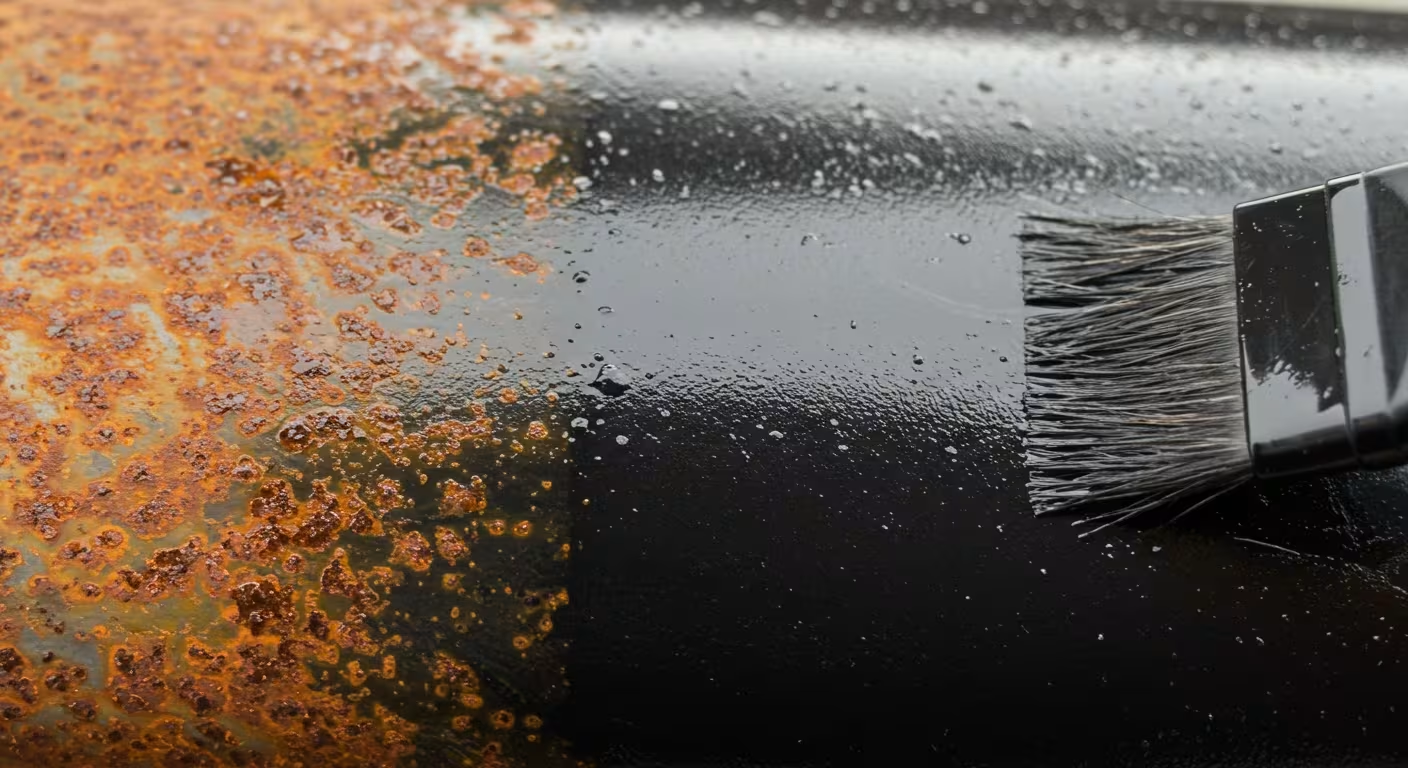
Unlike rust removers that strip away corrosion, rust converters work by chemically transforming iron oxide (rust) into a stable compound that creates a protective barrier. This transformed surface can then be painted or sealed, preventing further corrosion and extending the life of the metal.
At CarRust.co.uk, we've conducted rigorous independent testing to determine which rust converters perform best in the challenging UK climate. Our research included laboratory testing, real-world application, and consultation with industry experts to provide you with authoritative guidance for your rust treatment projects.
How Rust Converters Work
Understanding the science behind rust converters helps explain why some products outperform others. Most rust converters work through one of two primary chemical mechanisms:
Tannic Acid-Based Converters
These products use tannic acid to react with iron oxide, converting it to iron tannate, a stable blue-black compound. This reaction:
- Creates a protective polymeric layer over the treated surface
- Provides a stable base for primers and paints
- Works well for light to moderate surface rust
Phosphoric Acid-Based Converters
These formulations convert iron oxide to iron phosphate through a chemical reaction. This process:
- Creates a more durable conversion layer than tannic acid
- Provides better long-term protection
- Often includes polymers that enhance the protective barrier
- Is generally more effective for moderate to severe rust
The Chemistry of Rust Conversion
When phosphoric acid-based converters react with rust (Fe₂O₃), they form iron phosphate (FePO₄), which is chemically stable and resistant to further oxidation. This compound creates a protective barrier that prevents oxygen and moisture from reaching the underlying metal, effectively halting the corrosion process.
Our Testing Methodology
To ensure our recommendations are reliable and relevant to UK conditions, we developed a comprehensive testing protocol that evaluates rust converters under both controlled laboratory conditions and real-world scenarios.
Sample Preparation
We used unpainted sections of 1mm-thick mild steel that were:
- Exposed to outdoor UK weather conditions for over 12 months
- Developed uniform surface rust that was ingrained but not flaking or holed
- Cleaned and dried before treatment
- Treated according to each manufacturer's specific instructions
Application and Curing
For each product tested:
- One side of each sample was left with only the converter applied
- The other side received the converter plus two light coats of automotive primer and topcoat
- All samples were allowed to cure for the manufacturer's recommended time
Accelerated Corrosion Testing
To simulate harsh UK conditions, we:
- Sprayed samples with warm salt water solution daily for five weeks
- Maintained consistent temperature and humidity throughout testing
- Documented progressive changes with high-resolution photography
- Measured the extent of new corrosion formation weekly
Evaluation Criteria
Products were rated on:
- Conversion effectiveness - How completely the rust was transformed
- Corrosion resistance - Protection provided against new rust formation
- Ease of application - User-friendliness and consistency of application
- Drying/curing time - Time required before handling or painting
- Value for money - Performance relative to cost per 100ml
- Compatibility with paints - How well paints adhered to the treated surface
Top Rust Converters in the UK
After extensive testing, we've identified the best-performing rust converters available in the UK market. Here are our findings, ranked by overall performance:
1. Jenolite Rust Converter Spray - Best Overall
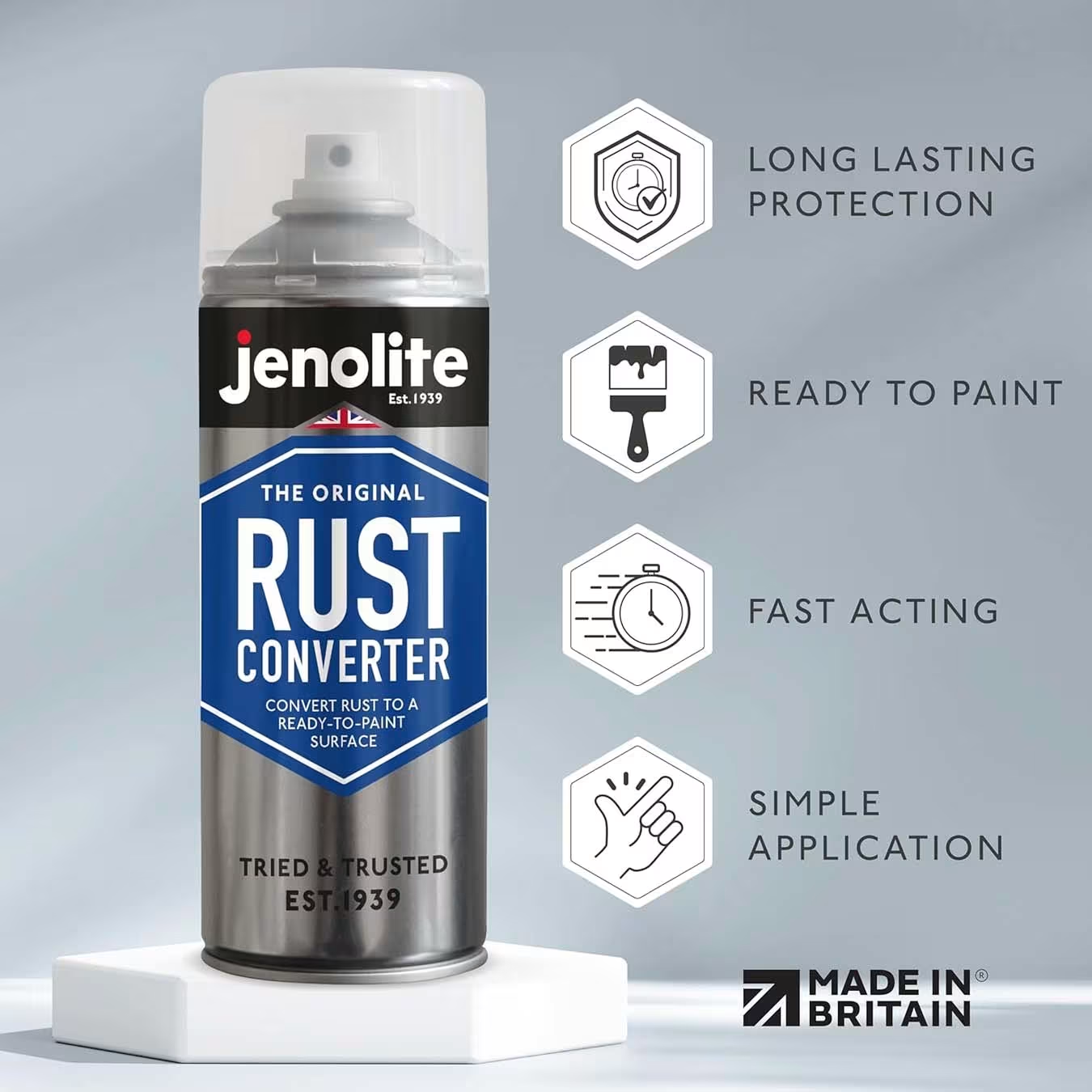
Price: £18.95 for 400ml (£4.99 per 100ml)
Application Method: Aerosol spray
Jenolite's Rust Converter Spray emerged as the clear winner in our testing. Unlike most competitors that use brush application, this aerosol spray delivers a waxy coating that distributes evenly without puddling or uneven coverage.
Pros:
- Superior rust conversion with minimal breakthrough after salt testing
- Aerosol application ensures even coverage, especially on complex surfaces
- Economical despite higher initial cost, as less product is wasted
- Excellent compatibility with automotive paints
- Waxy finish provides additional protection even without topcoat
Cons:
- May require masking of adjacent areas to prevent overspray
- Less precise for small, targeted applications
- Not ideal for intricate or recessed areas
Our Verdict: Jenolite Rust Converter Spray offers the best overall performance for most automotive applications. Its unique aerosol delivery system provides significant advantages over traditional liquid converters, particularly for larger surface areas and complex shapes. The slightly higher cost per application is justified by superior results and reduced waste.
Buy on Amazon2. Neutrarust 661 Rust Converter & Primer – Proven Performance
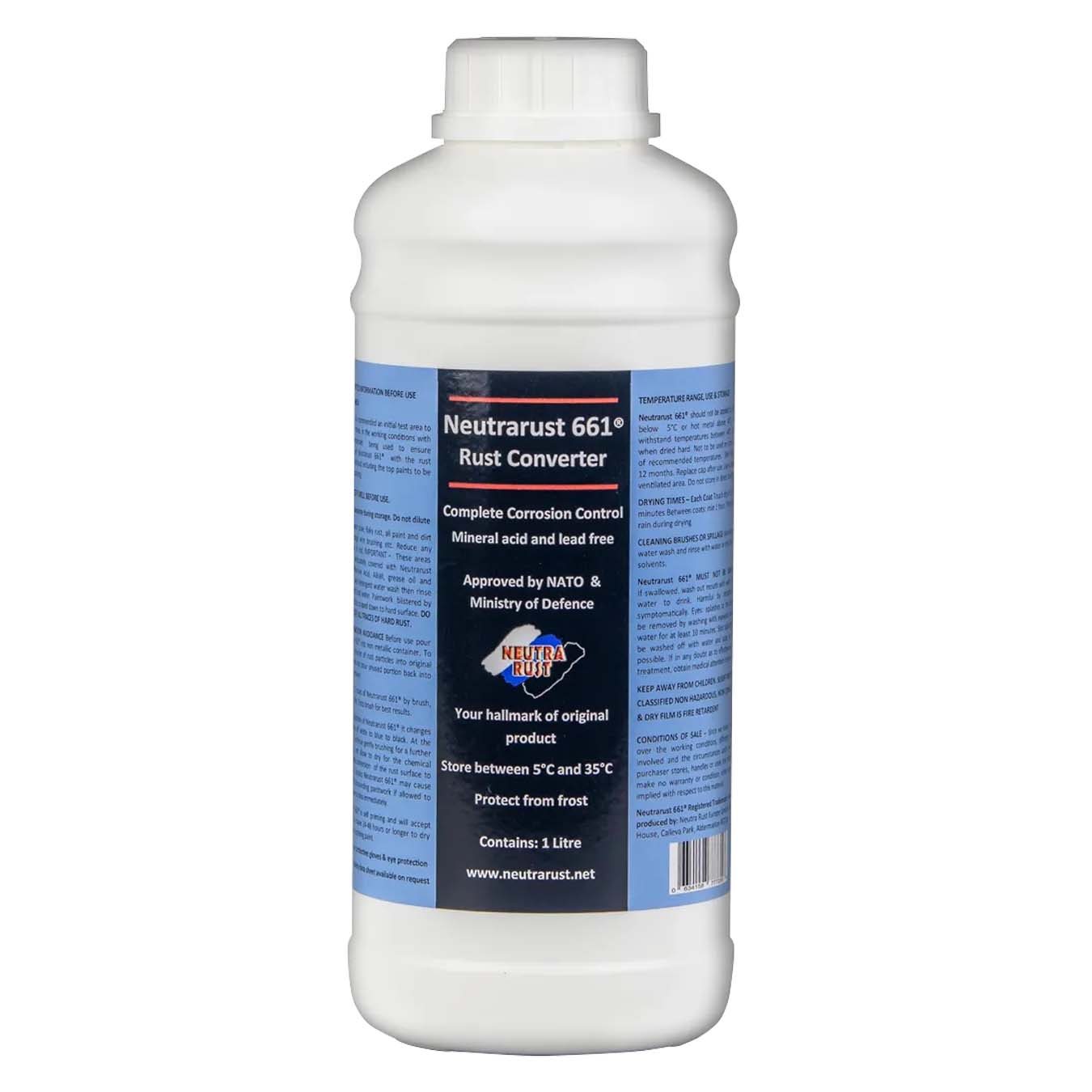
Price: Approximately £42 for 1 litre (£4.20 per 100ml)
Application Method: Brush or spray
Neutrarust 661 has earned its reputation through rigorous testing, securing approvals from NATO and the Ministry of Defence. Its robust formula quickly reacts with rust, converting it into a stable black primer within seconds—ideal for immediate surface preparation and protection.
Pros:
- Rapid rust conversion—turns rust black instantly
- Officially approved by NATO and the UK Ministry of Defence
- Highly versatile application methods (brush or spray)
- Proven effectiveness backed by over 40 years in the industry
- Cost-effective for large projects or extensive rust coverage
Cons:
- Brush application may require additional labour for even coverage
- Less suitable for small, precision tasks due to quick reaction time
Our Verdict: Neutrarust 661 excels in speed and reliability, making it an excellent choice for larger rust-conversion projects. Its longstanding industry reputation and official approvals underscore its quality, though users should be mindful of its rapid action, which may require careful handling for intricate applications.
Buy on Amazon3. Rustbuster Fe-123 - Best for Vertical Surfaces
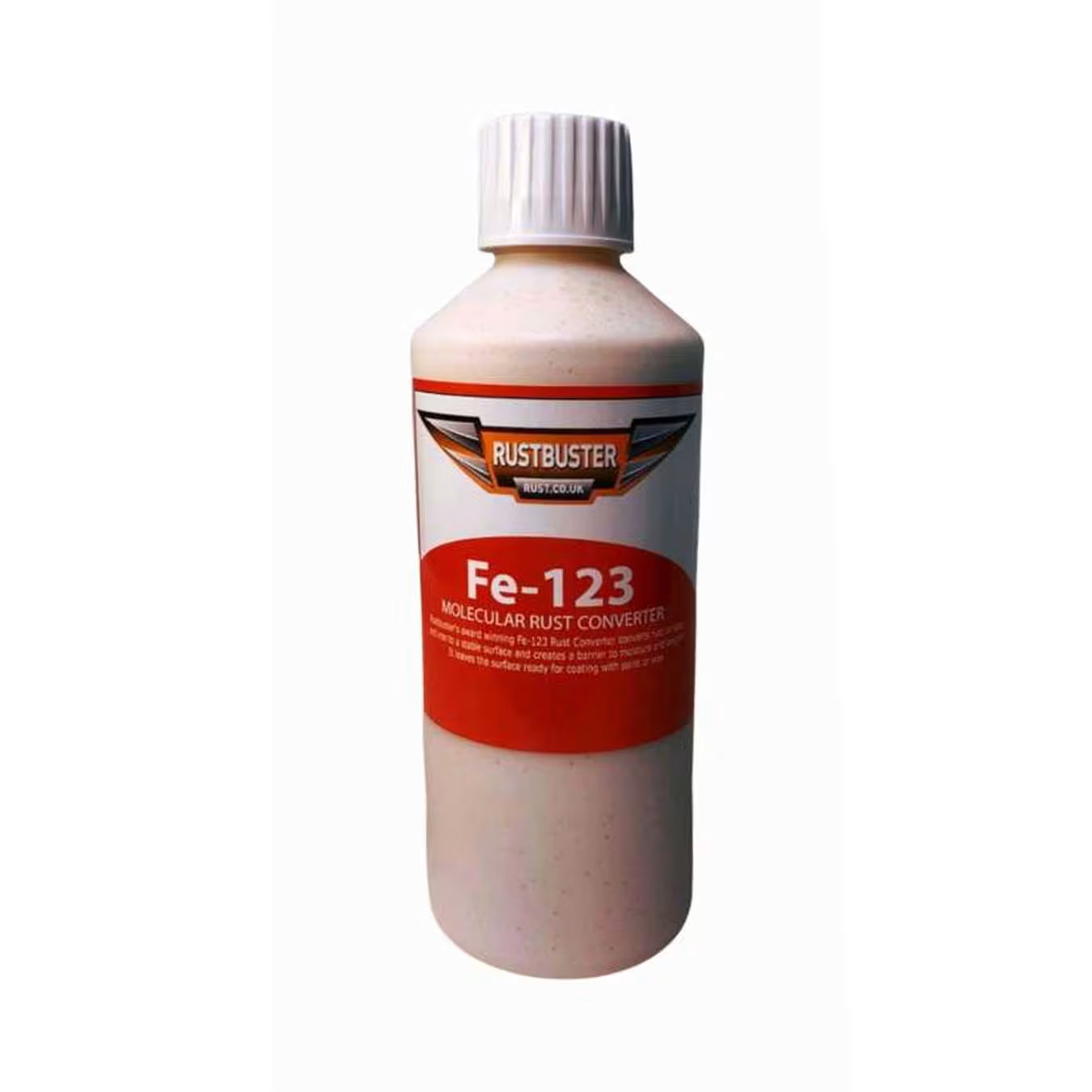
Price: £21.00 for 500ml (£3.50 per 100ml)
Application Method: Brush
Rustbuster Fe-123 impressed with its thick, cream-like consistency that adheres exceptionally well to vertical surfaces without dripping or running.
Pros:
- Excellent adhesion to vertical surfaces with minimal dripping
- Remains white initially, making it easy to see coverage
- Develops into a tough black coating after approximately 30 minutes
- Ready for painting after just two hours
- Good value considering performance and coverage
Cons:
- Thicker consistency can make even application more challenging
- Requires thorough mixing before use
- Slightly less effective than Jenolite Spray in salt spray testing
Our Verdict: Rustbuster Fe-123 is an excellent choice for vertical surfaces or areas where dripping would be problematic. Its unique consistency and quick conversion time make it ideal for sills, door pillars, and other upright components. A strong second-place finisher that excels in specific applications.
Buy on Rust.co.uk4. Bilt Hamber Hydrate-80 - Best Value
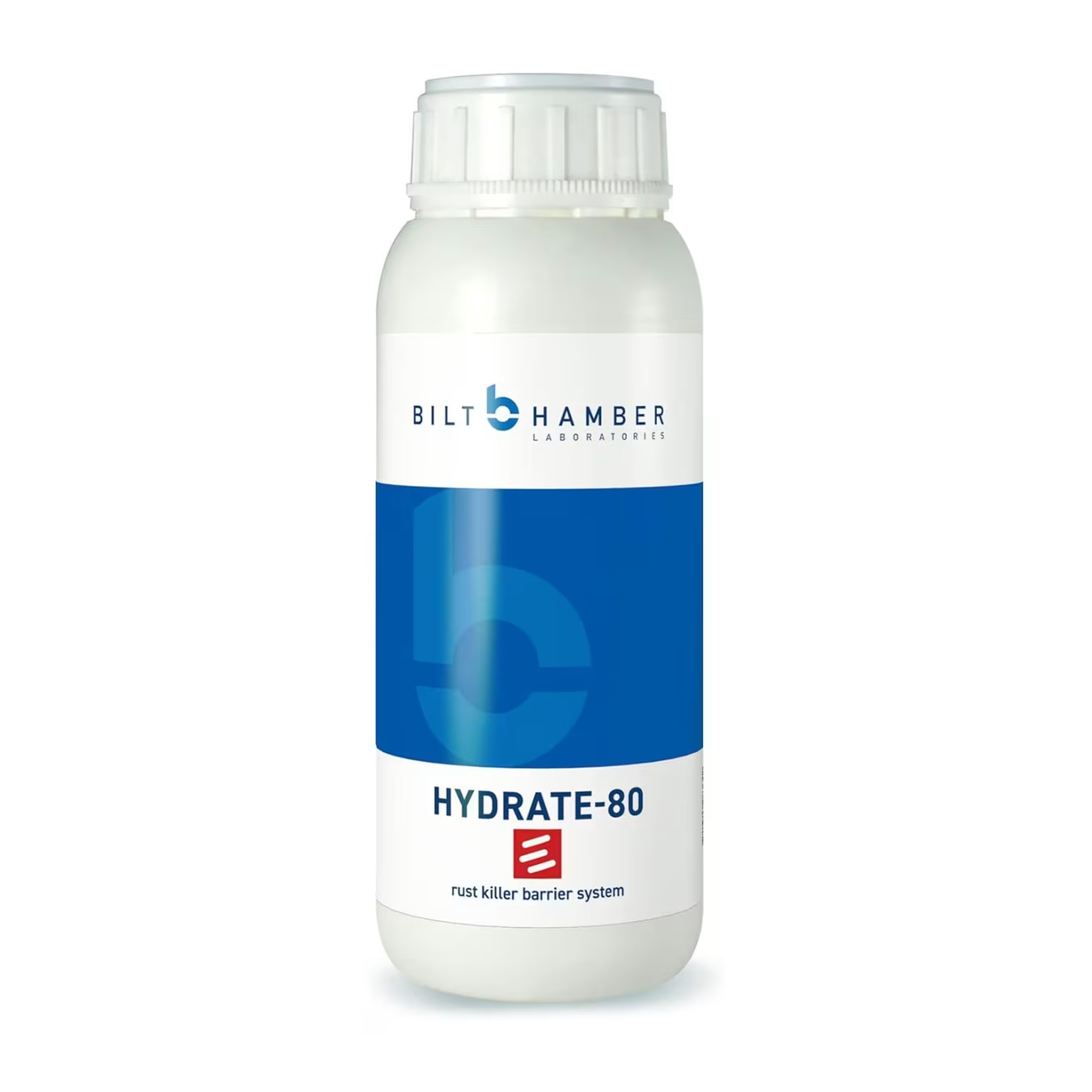
Price: £22.50 for 500ml
Application Method: Brush
Bilt Hamber Hydrate-80 offers excellent value while delivering strong performance, particularly on unpainted surfaces.
Pros:
- Best value for money among top performers
- Soaks into rust quickly and easily
- Turns corrosion black within seconds, confirming active conversion
- Unpainted side performed better than painted side in our tests
- Ideal for treating large areas economically
Cons:
- Container lid design can be problematic
- Slightly less effective than top two products in salt spray testing
- Thinner consistency can lead to uneven application if not careful
Our Verdict: Bilt Hamber Hydrate-80 offers the best balance of performance and value. It's particularly well-suited for larger restoration projects where cost becomes a significant factor. The rapid visual confirmation of conversion (turning black) makes application more foolproof for DIY users.
Buy on Amazon5. Nitromors Rust Converter - Best for Inaccessible Areas
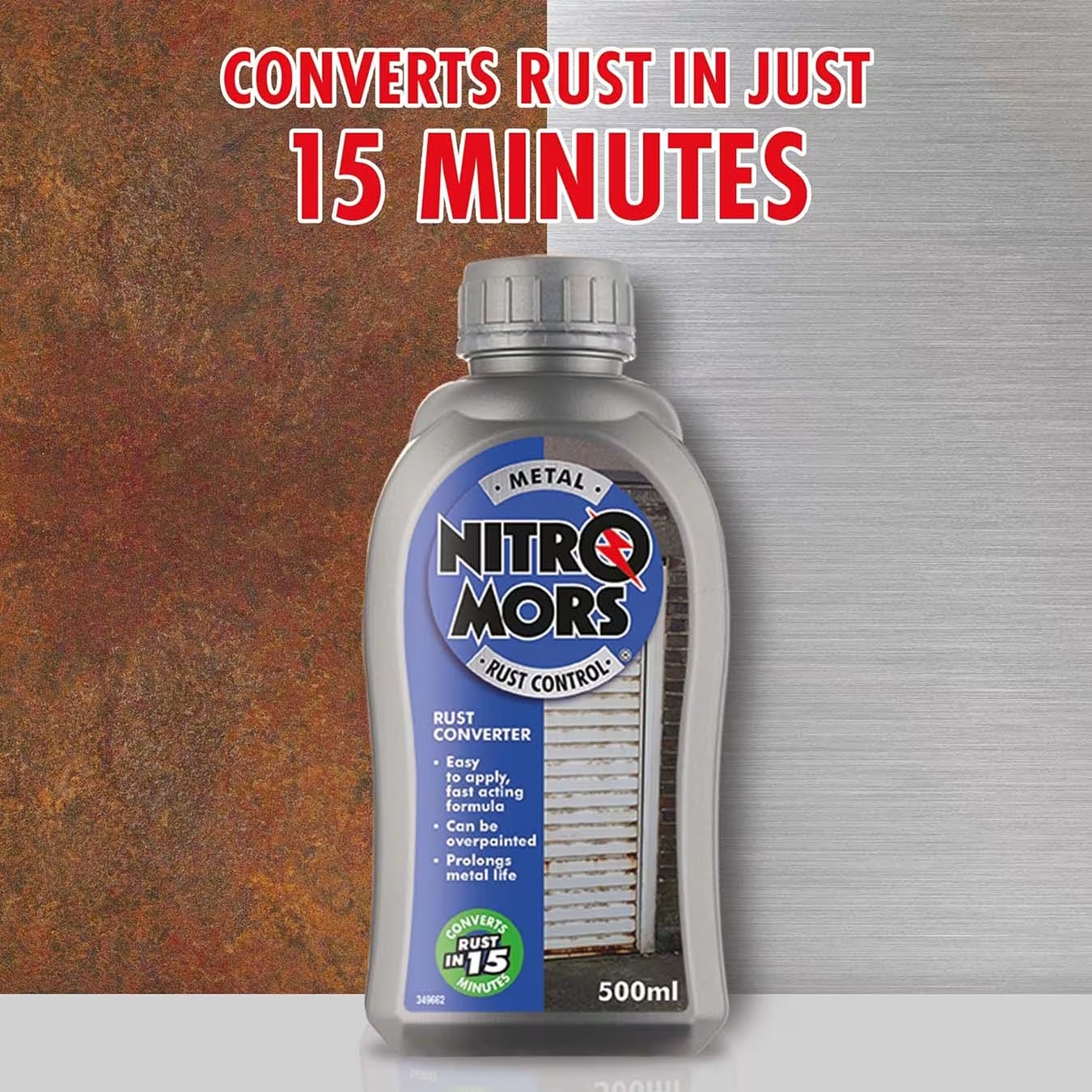
Price: £18.00 for 500ml (£3.60 per 100ml)
Application Method: Brush
Nitromors Rust Converter's watery consistency makes it ideal for penetrating tight spaces and crevices.
Pros:
- Excellent penetration into seams, joints, and hard-to-reach areas
- Works quickly, turning rust black immediately
- Only requires one coat, making it economical
- Good value considering performance
- Works in just 15 minutes
Cons:
- Watery consistency can lead to runs on vertical surfaces
- Mid-ranking protective performance in salt spray tests
- Less effective as a standalone treatment without topcoat
Our Verdict: Nitromors Rust Converter is the go-to choice for treating rust in difficult-to-access areas like seams, box sections, and drilled holes. Its thin consistency allows it to flow into spaces where thicker products cannot reach, making it a valuable specialist option despite its middle-ranking overall performance.
Buy on Amazon6. Hammerite Kurust - Most Widely Available
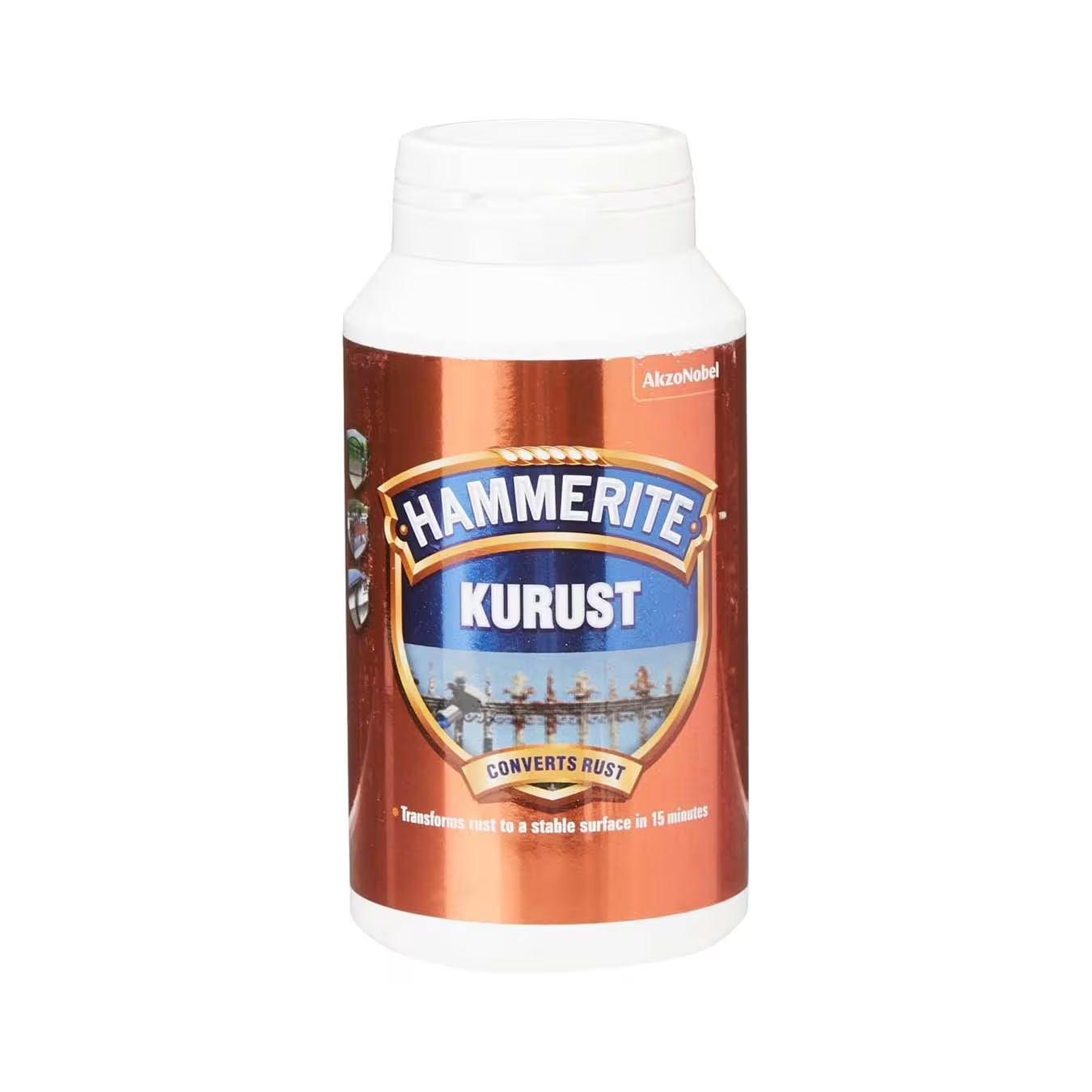
Price: £11.42 for 250ml (£5.03 per 100ml)
Application Method: Brush
Hammerite Kurust is perhaps the most recognizable name in rust treatment and is widely available in hardware stores across the UK.
Pros:
- Readily available in most hardware and automotive stores
- Works quickly, transforming rust in 15 minutes
- Familiar brand with established reputation
- Good for small touch-up jobs
Cons:
- Poor performance in our salt spray test
- Little protection on unpainted surfaces
- Relatively expensive per 100ml
- Watery consistency tends to be repelled by rust, making application tricky
Our Verdict: Despite its widespread availability and brand recognition, Hammerite Kurust underperformed in our rigorous testing. It may be suitable for minor touch-ups or when other options aren't available, but it doesn't offer the same level of protection as our top recommendations. Always apply a quality primer and topcoat when using this product.
Buy on Amazon| Product | Rating | Price (per 100ml) | Application | Best For |
|---|---|---|---|---|
| Jenolite Rust Converter Spray | ★★★★★ | £4.74 | Aerosol | General use, complex surfaces |
| Neutrarust 661 Rust Converter | ★★★★★ | £4.20 | Brush/Spray | Rapid rust conversion, large projects |
| Rustbuster Fe-123 | ★★★★★ | £3.50 | Brush | Vertical surfaces |
| Bilt Hamber Hydrate-80 | ★★★★ | £3.39 | Brush | Large areas, value |
| Nitromors Rust Converter | ★★★★ | £3.60 | Brush | Crevices, seams |
| Hammerite Kurust | ★★★ | £4.57 | Brush | Small touch-ups |
Application Best Practices
Even the best rust converter will fail if not applied correctly. Based on our testing and industry best practices, we've developed this comprehensive application guide to help you achieve optimal results.
Surface Preparation
Proper preparation is crucial for effective rust conversion:
- Clean thoroughly - Remove all dirt, grease, oil, and loose rust
- Degrease the surface - Use a quality degreaser to remove any oils or waxes
- Remove loose rust - Wire brush or sand to remove flaking or loose rust
- Remove salt deposits - In the UK, road salt is a major concern; use a dedicated salt remover like Rustbuster Chlor-X
- Dry completely - Ensure the surface is 100% dry before application
Critical Preparation Step
Degreasing is perhaps the most overlooked yet critical step. Even microscopic oil films will prevent rust converters from properly bonding with the metal. Never use white spirit, turps, diesel, or paraffin for degreasing, as they leave residues. Instead, use a proper automotive degreaser that emulsifies oils.
Application Techniques
For optimal results:
- For spray products (Jenolite Spray):
- Shake can thoroughly before use (at least 2 minutes)
- Apply in thin, even coats from 20-30cm distance
- Allow each coat to become tacky before applying the next
- Consider masking adjacent areas to prevent overspray
- For brush-on products:
- Stir thoroughly before use
- Use a clean, synthetic brush (natural bristles can introduce oils)
- Apply in thin, even coats, working the product into the surface
- For vertical surfaces, start at the bottom and work upward
- Avoid overworking the product once applied
Curing and Topcoating
After application:
- Allow the converter to fully cure according to manufacturer instructions (typically 12-24 hours)
- Do not rinse the surface after application unless specifically instructed
- Apply a suitable primer once cured (most converters are not designed as standalone treatments)
- Follow with appropriate topcoat for maximum protection
Temperature Considerations
Most rust converters work best between 10-25°C. Application in colder temperatures will slow the chemical reaction and may result in incomplete conversion. In the UK's often cool climate, consider working in a heated garage or waiting for warmer days when possible.
Industry Expert Insights
Leading industry experts have shared valuable insights on rust conversion best practices. Their expertise can help you achieve better results with your rust treatment projects.
Ian Allen, Rustbuster Ltd
Ian Allen is the proprietor of Rustbuster Ltd and a widely recognized expert in automotive rust treatment. He emphasizes the importance of thorough preparation:
"The biggest mistake I see is inadequate degreasing. Even invisible oil films will prevent proper conversion. I always recommend a two-stage cleaning process: first with a traffic film remover to remove general dirt, then a dedicated degreaser to remove oils. Only then can a converter properly react with the rust."
Rob Marshall, Car Mechanics Magazine
Automotive expert Rob Marshall from Car Mechanics Magazine highlights the limitations of rust converters:
"Rust converters are excellent for surface rust, but they're not miracle workers. If rust has penetrated through the metal or caused significant pitting, mechanical repair or replacement is the only proper solution. Converters work best as part of a comprehensive treatment system, not as a standalone solution."
Tom Barnard, Auto Express
Tom Barnard, who conducts product testing for Auto Express, notes the evolution in rust converter technology:
"The move to aerosol application with products like Jenolite Spray represents a significant advancement. The even application and waxy formulation provide superior protection compared to traditional liquid converters. For the average DIY restorer, this technology makes achieving professional-quality results much more accessible."
Professional Rust Treatment Services
While DIY rust conversion is suitable for many projects, some situations call for professional intervention. Here are some of the top-rated specialist services in the UK:
Rustbuster Ltd
Locations: Spalding (Lincolnshire), Telford (Shropshire), Preston (Lancashire)
Specialties: Complete rust proofing services, cavity wax injection, underbody treatment
Rustbuster offers ISO9001-certified rust treatment services using their own award-winning products. Their Full Corrolan Hot Fog Rustproofing service takes approximately 1.5 days and includes thorough preparation, rust conversion, underbody coating, and cavity wax injection.
Customer feedback consistently praises their thorough approach and attention to detail, with many noting the comprehensive documentation provided, including before/after photos of all work performed.
Corotec
Location: Essex, UK
Specialties: Classic car rust proofing, corrosion control for collectible vehicles
Corotec specializes exclusively in classic car preservation, working with enthusiasts, collectors, and cognoscenti. As a Dinitrol UK approved specialist, they use the latest generation of rust inhibiting products specifically formulated for vintage vehicles.
Their focused expertise makes them particularly valuable for owners of rare or valuable classics where specialized knowledge of period-correct treatments is essential.
Rust Revival Ltd
Location: West Midlands, UK
Specialties: Vintage and classic car body restoration, bespoke panel fabrication
Rust Revival specializes in comprehensive restoration services with a particular focus on Pre & Post War classics. Their expertise in bodywork restoration using heritage skills makes them ideal for projects requiring extensive rust repair beyond what converters alone can address.
Their motto of "Dedication. Reliability. Value." reflects their commitment to preserving classic vehicles for future generations through meticulous craftsmanship.
When to Choose Professional Services
Consider professional rust treatment when:
- Dealing with valuable classic or collectible vehicles
- Addressing structural components where safety is critical
- Treating inaccessible areas requiring specialized equipment
- Handling severe rust that has compromised metal integrity
- Seeking long-term warranty protection for the work performed
Common Mistakes to Avoid
Based on our testing and industry knowledge, here are the most common mistakes people make when using rust converters:
Preparation Errors
- Inadequate degreasing - Even invisible oil films prevent proper conversion
- Applying to wet surfaces - Moisture dilutes the converter and compromises effectiveness
- Insufficient removal of loose rust - Converters need direct contact with firmly adhered rust
- Applying over previous treatments - Old paints or coatings prevent proper chemical reaction
- Neglecting salt removal - Road salt residue interferes with conversion chemistry
Application Mistakes
- Applying too thickly - Creates uneven curing and surface problems
- Insufficient coverage - Missing spots will continue to rust
- Applying in improper conditions - Temperature and humidity affect chemical reactions
- Mixing different products - Can cause chemical incompatibilities
- Rushing between coats - Not allowing proper reaction time
Post-Application Errors
- Skipping topcoat - Most converters are not designed as standalone treatments
- Using incompatible primers - Some primers react poorly with converters
- Insufficient curing time - Rushing to paint before conversion is complete
- Expecting miracles - Converters cannot repair holes or severely compromised metal
- Neglecting edges and seams - These areas are most vulnerable to moisture ingress
The Myth of "One and Done"
Perhaps the biggest misconception is that rust converters provide permanent protection on their own. In reality, they are just one step in a comprehensive rust treatment system. For lasting protection, converted surfaces should always be properly primed and painted or sealed.
Conclusion
Our comprehensive testing clearly identifies Jenolite Rust Converter Spray as the standout performer among UK rust converters, offering superior protection, ease of application, and excellent compatibility with automotive paints. Its unique aerosol delivery system provides significant advantages over traditional liquid converters for most applications.
For specific scenarios, alternative products may be more suitable: Rustbuster Fe-123 excels on vertical surfaces, Bilt Hamber Hydrate-80 offers exceptional value for large projects, and Nitromors Rust Converter is ideal for penetrating tight spaces and seams.
Regardless of which product you choose, remember that proper preparation is absolutely critical to success. The time invested in thorough cleaning, degreasing, and surface preparation will pay dividends in the effectiveness and longevity of your rust treatment.
For valuable classics or extensive rust issues, consider the professional services offered by specialists like Rustbuster Ltd, Corotec, or Rust Revival Ltd. Their expertise and specialized equipment can achieve results beyond what's possible with DIY approaches.
Finally, understand that rust converters are not miracle products but rather effective tools when used correctly as part of a comprehensive treatment system. When combined with proper preparation, application, and topcoating, they can significantly extend the life of your vehicle's metal components and help preserve your pride and joy for years to come.