Best Underbody Seal and Wax UK 2026
Table of Contents
The underside of a car spends every British winter being sandblasted with grit and soaked in salty spray. A good underbody coating keeps that off the floor, arches and chassis rails. Here are the underbody seals and waxes worth buying in the UK, what each one is actually made of, and which to use where.
Why the Underside Matters
Floor pans, jacking points, chassis rails and the backs of the wheel arches take a constant beating. Stones chip the paint, salt water finds the chip, and rust spreads under the coating where you cannot see it. On older cars, the original underseal has often hardened and cracked, which can be worse than no coating at all because it holds water against the steel.
A fresh underbody coating, applied to clean, sound metal, puts a sacrificial layer between the steel and the road. Choose the right type and it will also seal seams, absorb stone strikes and be easy to maintain.
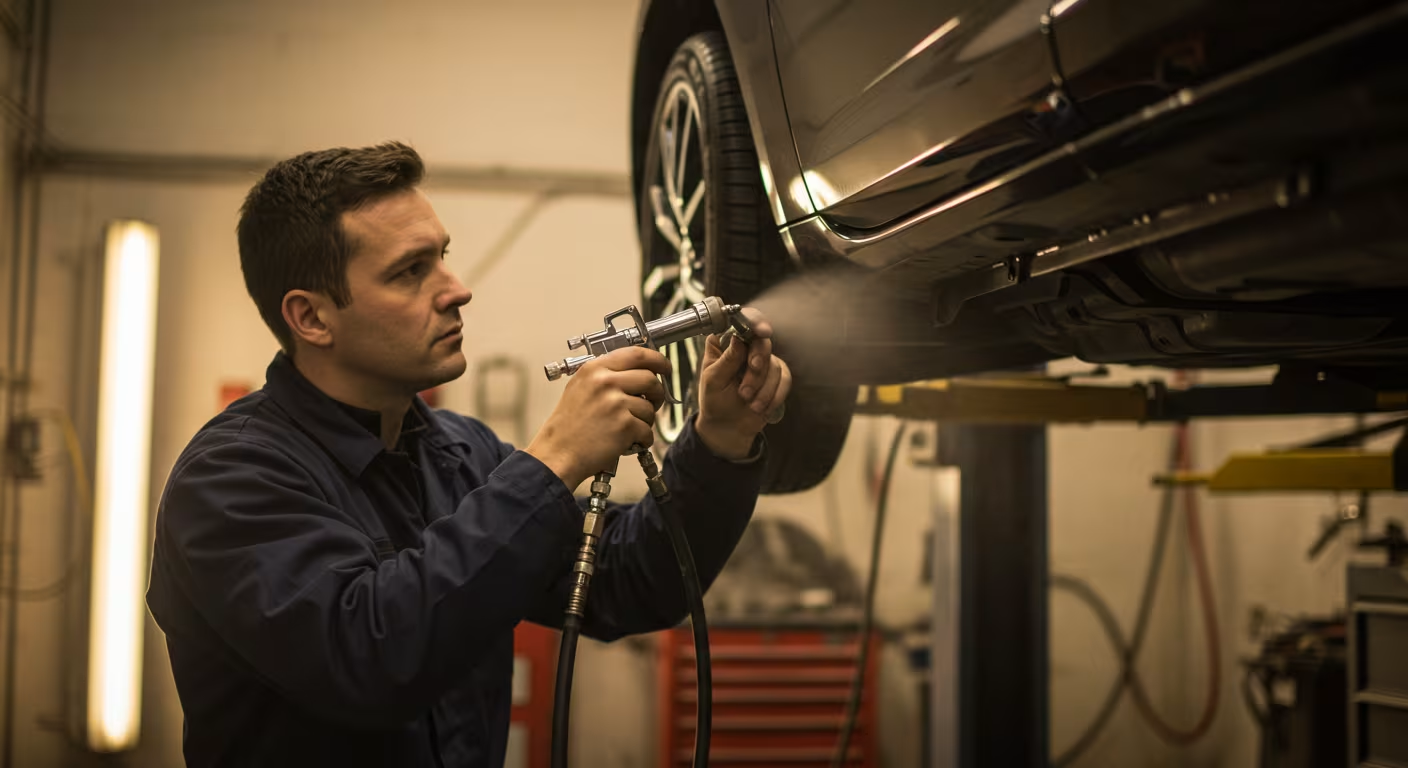
Wax Versus Bitumen
Almost every product in this category is one of two things, and the difference matters more than the brand.
Wax-based underbody coatings
Products such as Dinitrol 4941, Liqui Moly Wax Underseal and Waxoyl Black are corrosion-inhibiting waxes. They dry to a soft, slightly tacky film that stays flexible, flows back over small chips and scratches (often described as self-healing), and creeps into seams. Because they never set hard, they cannot crack and trap water. The trade-off is that they wear away over time and need topping up.
Bitumen and rubber underseal
Traditional underseal is bitumen or rubber based. It goes on thicker, shrugs off stone impact and deadens road noise. Hammerite Underbody Seal blends bitumen with Waxoyl rust inhibitors so it stays more flexible than old-fashioned underseal. The risk with any bitumen coating is age: once it hardens and lifts at the edges, water gets behind it and stays there.
Stone chip coatings
Stone chip coatings such as Hammerite Stone Chip Shield are tougher, textured paints for the outside lower panels: sill faces, valances and lower door edges. They are about impact resistance and appearance rather than sealing the floor.
The restorer's rule of thumb
Wax everywhere you can, bitumen or stone chip only where the stones hit hardest. On a classic, a wax underbody coating plus cavity wax inside the box sections is the combination most specialists would recommend.
How We Chose
We have not run a salt-spray cabinet test on these products. Instead we shortlisted the underbody seals, waxes and stone chip coatings listed on Amazon UK in November 2026, then ranked them on:
- Owner ratings and review volume together, so a well-rated product with hundreds of reviews outranks a perfect score from a handful
- What the coating is: wax, bitumen blend or stone chip, from the manufacturer's own description, and what that means for long-term protection
- How it is applied: aerosol, brush or Schutz gun, and whether it suits a home garage
- Pack size for one car, and value per litre
- Reputation among UK restorers, and the recurring points in owners' reviews
Where a point below comes from owners' reviews rather than the product specification, we say so. Prices are those we saw on Amazon UK at the time of writing and will move.
Bilt Hamber Dynax UB and Lanoguard are both well regarded but are not sold on Amazon UK, so they are not ranked here; our undercoating guide covers Dynax UB.
The Best Underbody Seals and Waxes
1. Dinitrol 4941 Black Underbody Wax (3 x 500ml) - Best Overall
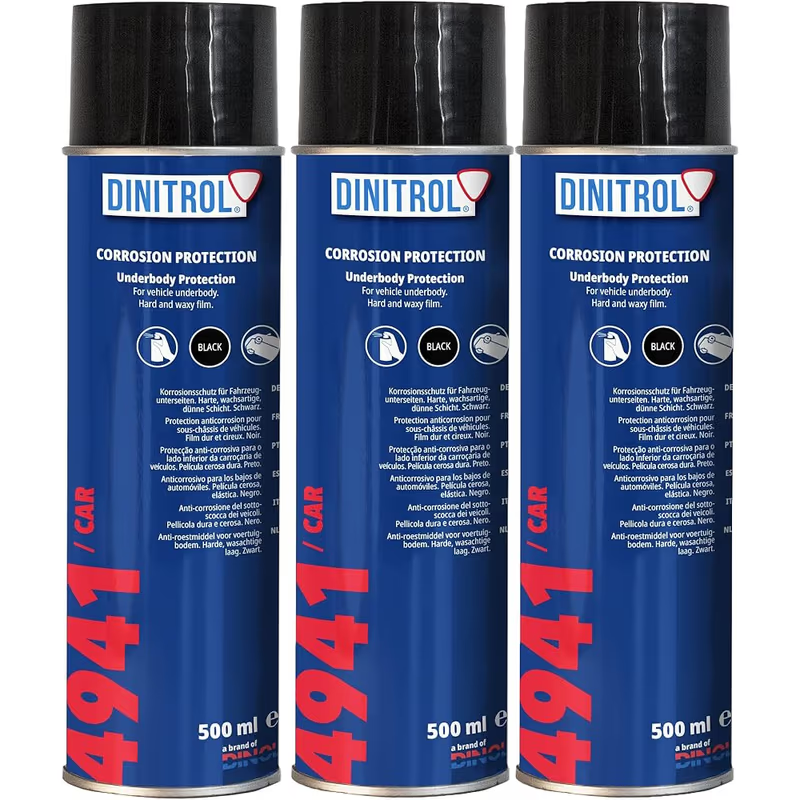
Price seen: £43.99 for 3 x 500ml aerosols
Type: Black wax underbody coating
Application: Aerosol (also sold in 1 litre cans for a Schutz gun)
Dinitrol 4941 is an OEM-approved black underbody wax that dries to a robust but self-healing film with good abrasion resistance. It is the coating many classic specialists use, and owners on Amazon UK rate it highly for quality, coverage and ease of application. One reviewer found it much easier and tidier to apply than the equivalent Waxoyl product, and goes on evenly. Three cans covers the floor and arches of a small car.
Pros:
- Wax film stays flexible and self-heals over small stone chips
- Tidy aerosol application with an even, black finish
- OEM-approved product used by professional rustproofers
- Strong rating from a good number of owners
- Easy to top up in future, as wax bonds to wax
Cons:
- Owners note you get through cans quickly, so buy more than you think
- Strong solvent; reviewers stress wearing a mask
- Less impact-resistant than bitumen in the worst-hit spots
Our Verdict: The best underbody coating for a car you want to keep. For a whole underside, the 3 x 1 litre kit with spray gun (4.6/5 from 17 ratings, £79.99 when we looked) works out cheaper, but needs a compressor giving about 90 psi and 4 cfm.
Buy on Amazon2. Hammerite Underbody Seal with Waxoyl (1 litre tin) - Best for Wheel Arches
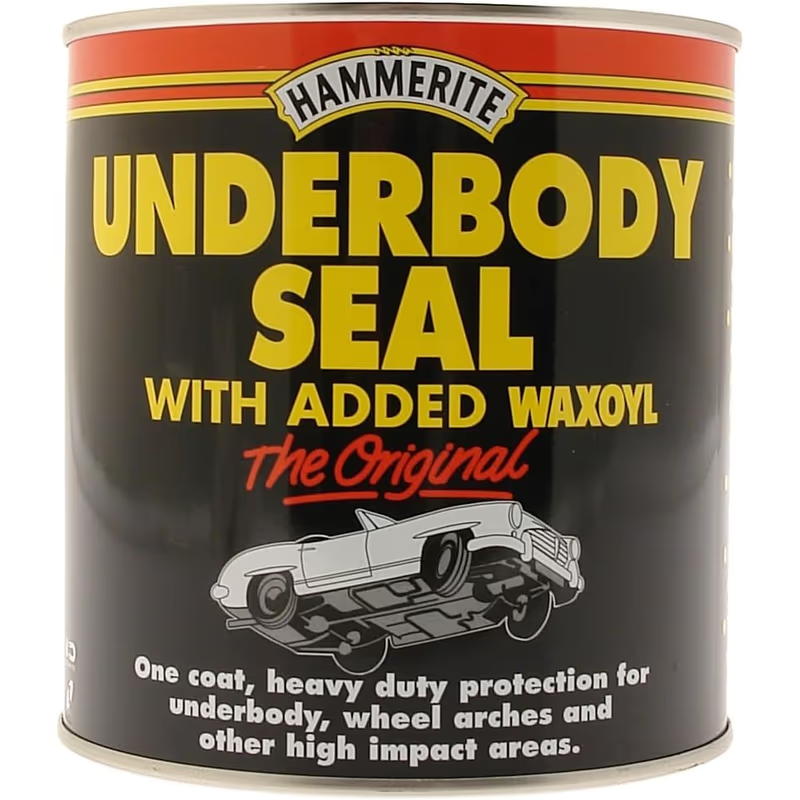
Price: See Amazon for today's price (1 litre tin)
Type: Bitumen underseal with Waxoyl rust inhibitors
Application: Brush or Schutz gun
Hammerite's underbody seal is the classic British brush-on underseal, updated with Waxoyl inhibitors that displace moisture and help stop rust returning. Hammerite describes it as heavy-duty protection for wheel arches, floor panels and other high-impact areas that stays flexible and re-seals when hit by stones. It is the most-reviewed underbody seal we looked at, and owners say it spreads well, dries without dripping and builds a thick protective layer.
Pros:
- Thick, impact-absorbing coat for arches and sill undersides
- Non-drip, so it brushes on upside down
- Deadens road noise in the arches and floor
- Hundreds of strong owner ratings and wide availability
- Also sold as a 600ml aerosol and a 2.5 litre tin
Cons:
- Contains bitumen; check it yearly, as any lifting edge can hold water behind it
- Much harder to remove later than a wax coating
- Owners differ on the consistency, from soft and greasy to waxy
Our Verdict: The pick for the backs of wheel arches and anywhere that takes repeated stone strikes. On a restored classic, use it there and wax the rest of the floor.
Buy on Amazon3. Liqui Moly Wax Underseal 500ml Spray - Best Value Aerosol
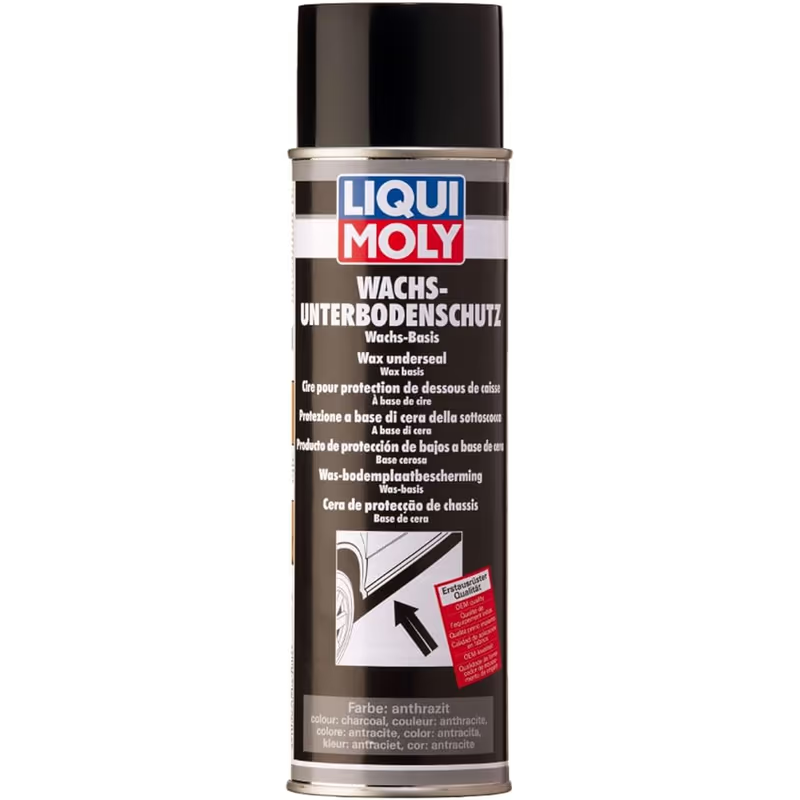
Price seen: £12.18 for 500ml
Type: Wax and resin underbody coating, anthracite black
Application: Aerosol
Liqui Moly's wax underseal is a high-solids wax and resin coating that sprays finely with little mist and dries quickly, according to the maker. It can go on bare, prepared floors or over an existing PVC, bitumen or rubber underseal as a sealing top coat, which makes it useful for refreshing an older car. Owners find it very easy to apply, and one points out that because it is wax it stays slightly sticky rather than drying hard, which is exactly what keeps it flexible.
Pros:
- Lowest cost per can of the wax coatings here
- Can be used over existing underseal to seal and refresh it
- Fine spray with low mist, so less mess under the car
- Most reviewed wax underbody coating we looked at
Cons:
- Stays tacky, so it collects road dirt
- Liqui Moly says rust must be removed and the surface clean and dry first
- Less well known among UK classic specialists than Dinitrol
Our Verdict: The best value way to put a wax coat on a daily driver, or to seal an old underseal that is still sound. Buy three or four cans for a full floor.
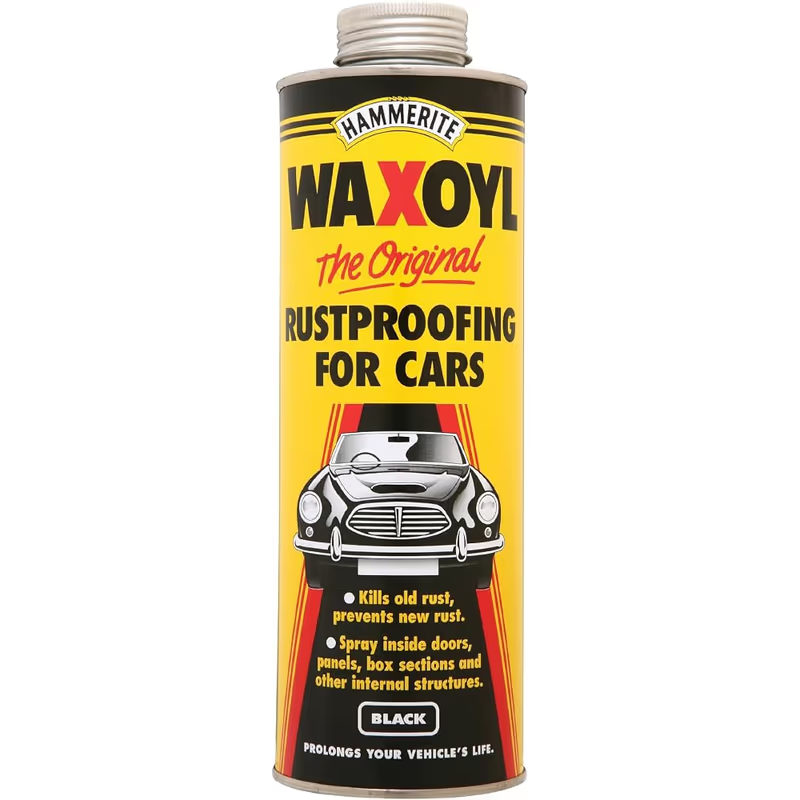
Buy on Amazon4. Hammerite Waxoyl Black (1 litre) - Best for Schutz Gun Users
Price: See Amazon for today's price (1 litre Schutz can)
Type: Black wax rustproofer
Application: Schutz gun, sprayer or brush
Waxoyl Black is the original British rustproofing wax in a black finish that suits the underside. Hammerite says it forms a flexible, weatherproof skin that does not crack, dry out or wash off in the rain, and lists chassis, behind the sills and door insides among its uses, so one product does the floor and the cavities. Owners rate it well for quality and coverage, and the 5 litre refill has hundreds of ratings of its own from people who have used it for decades.
Pros:
- One wax for the underside and the cavities
- Cheapest per litre in bulk, especially the 5 litre refill
- Soft, flexible film that is easy to top up
- Familiar product with a long track record in the UK
Cons:
- Thinner film than Dinitrol 4941, so expect to top up more often
- Needs warming to spray well
- One owner found the can has a lever lid rather than the screw cap they expected
Our Verdict: The economical choice if you already own a Schutz gun or the Waxoyl sprayer. For a whole underside plus cavities, the 5 litre refill (4.6/5 from 426 ratings) is the better buy.
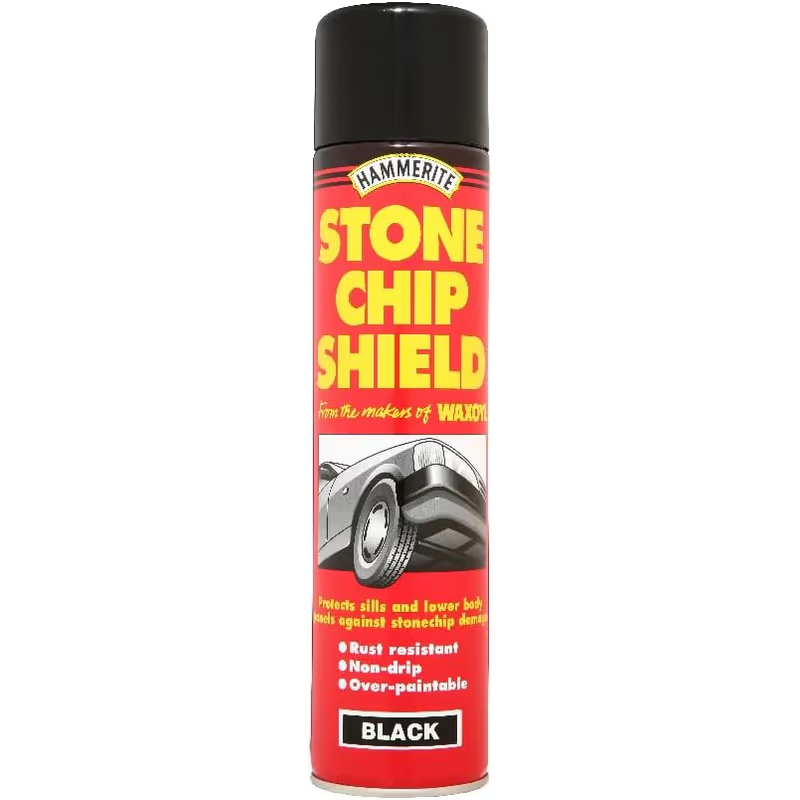
Buy on Amazon5. Hammerite Stone Chip Shield 600ml - Best for Sills and Valances
Price seen: £14.39 for 600ml
Type: Textured stone chip coating, black
Application: Aerosol
Not an underbody wax, but the right product for the outside lower panels that take the worst of the grit: sill faces, front and rear valances, and the bottom edges of doors and wings. Hammerite says it goes straight onto metal or plastic once loose paint and rust are brushed off, with no primer needed. It is the most-reviewed product in this guide, and owners praise its durability against stone chips and winter corrosion and its even matte black finish.
Pros:
- Tough textured finish that resists stone chips on exposed panels
- Neat, factory-look matte black; also sold in grey
- Easy aerosol application with no primer needed
- Huge number of positive owner ratings
Cons:
- A paint-type coating, not a wax: it does not creep into seams or self-heal
- Not for use inside cavities or as a whole-floor coating
- Mask carefully; overspray is hard to remove from paintwork
Our Verdict: Use it on the visible lower panels, and wax underneath and inside. Together they cover everything stones and salt can reach.
Buy on AmazonComparison Table
| Product | Amazon rating | Type | Application | Best for |
|---|---|---|---|---|
| Dinitrol 4941 | 4.7 (152) | Wax | Aerosol or gun | Floors, chassis rails, classics |
| Hammerite Underbody Seal | 4.7 (546) | Bitumen + Waxoyl | Brush or gun | Wheel arches, high-impact areas |
| Liqui Moly Wax Underseal | 4.6 (612) | Wax and resin | Aerosol | Value, sealing old underseal |
| Waxoyl Black 1L | 4.7 (208) | Wax | Gun, sprayer or brush | Bulk, underside plus cavities |
| Hammerite Stone Chip Shield | 4.6 (828) | Stone chip coating | Aerosol | Sill faces, valances |
Buying Guide
Match the coating to the car
On a classic or any car you plan to keep for years, choose wax: it can be inspected through, topped up and removed, and it will never hide rust behind a cracked skin. On a daily driver where you want maximum stone protection in the arches with minimal upkeep, a bitumen blend like Hammerite Underbody Seal is a reasonable choice, as long as you look at it every autumn.
Do not mix bitumen over wax
Bitumen will not bond to a wax film, so plan the order. Bitumen or stone chip coating goes on first where you want it, then wax goes everywhere else and can overlap it. Wax over old, sound underseal is fine and often a good way to seal it.
Aerosol, brush or gun?
Aerosols are tidy and quick for one car. Brushing bitumen into arches works well and wastes nothing. A Schutz gun on a compressor is the fastest and cheapest per litre for a full underside, but needs room, masking and a decent air supply.
How much do you need?
Three 500ml aerosols will usually cover the floor and arches of a small car. A full underside on a larger car can take two to three litres. Buy enough to finish in one session so the coats blend.
How to Apply Underbody Protection
- Get it up safely. Ramps or axle stands on firm ground, never just a jack. Take the wheels off if you can; it makes the arches far easier.
- Clean it properly. Pressure wash, then degrease. Scrape off any old underseal that has lifted or cracked, and look behind it.
- Deal with the rust. Wire brush loose rust, treat the rest with a rust converter, and repair anything holed before you coat it.
- Let it dry completely. A warm day or a fan heater (kept well away once coating starts) helps. Coating over damp metal seals the water in.
- Mask. Brakes, discs, exhaust, propshaft, handbrake cables, rubber bushes and anything that gets hot or needs servicing.
- Warm the product by standing aerosols or tins in warm water. It flows and sprays far better.
- Thin coats. Two or three light coats beat one heavy one. Work seams and lips first, then the flat panels.
- Inspect every autumn. Touch up worn patches before the salt season, and give wax coatings a fuller top-up every two to three years.
Keep it off the brakes and exhaust
Wax or underseal on brake discs or pads is dangerous, and on the exhaust it will smoke and can catch fire. Mask both carefully, and clean any overspray off brake components with brake cleaner before the car moves. Wear a mask and eye protection when spraying under a car.
Frequently Asked Questions
What is the best underbody seal in the UK?
For a classic or a car you intend to keep, a wax-based underbody coating such as Dinitrol 4941 is the best choice: it stays soft, self-heals when stones chip it, and can be topped up. Hammerite Underbody Seal with Waxoyl is the best traditional bitumen-based option for wheel arches that take a lot of stone impact.
Is wax or bitumen underseal better?
Wax is better for most cars. It stays flexible, creeps into seams and never traps water against the steel. Bitumen underseal is tougher against stone chips and deadens road noise, but as it ages it can harden, crack and lift, and water that gets behind it sits against the metal unseen. Many restorers use wax everywhere and keep bitumen or stone chip coating for the arches and sills only.
Can you put underseal over rust?
Remove loose rust and scale first, treat what is left with a rust converter, and only then coat it. Wax underbody coatings will soak into and seal light surface rust, but no underseal will stop rust that has already eaten deep into the metal. Never seal over flaking rust; it will carry on underneath.
How often should underbody wax be reapplied?
Inspect the underside every year, ideally in autumn before the salt goes down, and touch up anywhere the coating has worn through. Wax coatings typically want a fuller top-up every two to three years on a car used in winter; a dry-stored classic can go longer.
How much underbody seal do I need for a car?
As a rough guide, three 500ml aerosols will cover the floor and arches of a small car. A full underside on a larger car can take two to three litres, which is when buying in litre cans and using a Schutz gun becomes cheaper than aerosols.
Will underseal fail an MOT?
Underseal itself does not fail an MOT, but the tester must be able to inspect structural areas. A tester who cannot properly see the structure under fresh, heavy coating can decline to test those areas, so apply underbody coatings after any repairs and well before the test, and keep them neat.
Conclusion
For most owners, and especially for classics, the best underbody coating is a wax: Dinitrol 4941 is our pick, with Liqui Moly Wax Underseal as the budget alternative. Use Hammerite Underbody Seal in the arches if you want extra stone protection, and Stone Chip Shield on the sill faces and valances. Then finish the job from the inside with cavity wax, because the floor is only half the story.