Best Automotive Seam Sealers UK 2026
Table of Contents
Seams are where rust starts on most classic cars. Two panels overlap, water wicks into the gap, and the steel rots from the inside long before a bubble shows through the paint. A good seam sealer closes that gap for years. A bad one, or the wrong one, cracks, shrinks or traps water against the metal. These are the five we would buy on Amazon UK right now.
Why Seam Sealer Matters
Every factory sealed its spot-welded joints: floor pan to sill, inner wing to bulkhead, boot floor to rear valance, the drip rails and the seams around the windscreen aperture. On a car built in the 1960s or 1970s that original sealer has often dried, cracked and lifted, and the joint underneath it is now a water trap. When you weld in a new panel, the seam has to be sealed again or the new metal will go the same way.
Seam sealer is not filler and it is not underseal. It is a flexible bead or coat that keeps water and road salt out of a joint while letting the panels move slightly as the body flexes. It goes on after primer, before paint, and before cavity wax.
How Seam Sealers Work
The products sold as seam sealers fall into a few chemical families. Knowing which one you are buying tells you how it will behave.
One-part polyurethane (PU)
U-POL Tiger Seal and Sikaflex 221 are in this group. They cure by drawing moisture from the air, so there is nothing to mix. They stay rubbery once cured, do not shrink, bond strongly to primed steel and can be painted. The trade-off is that they are very sticky and hard to clean off skin and tools, and an opened cartridge goes hard if you leave it for weeks.
MS polymer and hybrid sealers
Liqui Moly's Liquimate 8300 sits here. These are similar in use to PU but tend to be smoother and, in this case, noticeably runnier, which helps the sealer find its way into a gap.
Synthetic rubber, solvent based
Tetrosyl's cartridge seam sealer is a rubber-based product that dries as the solvent evaporates. It is cheap and quick to overcoat, but it smells strongly while it dries and some owners find it less durable than a PU.
Brushable sealers
Sold in tins, such as Granville 0978, these are thick enough to stay where you brush them. They reproduce the brushed finish many classics left the factory with and cover wide overlaps quickly.
Two-part epoxy
Professional bodyshops use two-part epoxy seam sealers such as 3M 08308, which can go onto bare metal and set hard and fast. When we looked, the 3M cartridge was only offered on Amazon UK by a single seller at close to £90 with no UK reviews, so it is not in our list. If you want epoxy, a paint factor will usually supply it more cheaply, along with the dual cartridge gun it needs.
Sealer goes over primer, not over rust
No seam sealer stops rust that is already in the joint. Cut back to clean metal, treat any remaining rust (see our rust converter guide), prime, and only then seal. A bead of sealer over live rust just hides it.
How We Chose
We have not bench-tested these five against each other. Here is what we did:
- Searched Amazon UK for automotive and brushable seam sealers and left out tent, roof and household sealants that turn up in the same results.
- Ranked what was left by average star rating and number of ratings together, so a 4.7 from nine people did not beat a 4.6 from several hundred.
- Dropped anything that was not readily available to UK buyers at a sensible price, which is why the 3M epoxy is missing.
- Read the UK reviews for each product and noted the points that came up again and again. Where a pro or con below comes from owner reviews rather than the maker's data, we say so.
- Checked each product's stated chemistry and cure behaviour against the job of sealing a car seam.
Ratings and review counts are as shown on Amazon UK on 3 November 2026. Prices move about between sellers, so treat the figures as a guide and check the listing.
The Best Seam Sealers in the UK
1. U-POL Tiger Seal (Grey, 310ml) - Best Overall
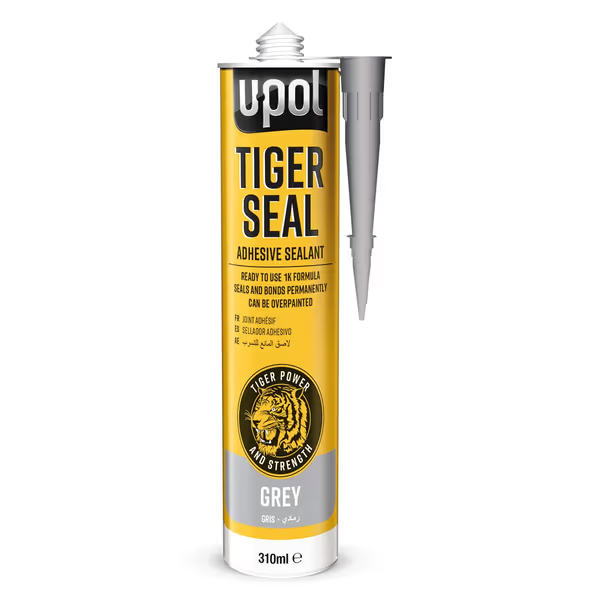
Price: from about £11 for a 310ml cartridge
Type: One-part polyurethane, cartridge gun
Tiger Seal is the seam sealer you will find in most UK bodyshops, and it tops our list because it combines a high rating with a very large number of owners. U-POL describe it as non-shrinking, permanently flexible and paintable, and it bonds to steel, aluminium and most plastics. We have chosen the grey version on purpose: it disappears under primer and colour, where black can grin through a light topcoat.
Pros:
- Large, consistent review base: 78% of ratings are five star
- Stays flexible, so it copes with body flex and vibration (a point owners repeat)
- Thick enough to tool into a neat bead without running, according to reviewers who tried cheaper alternatives
- Paintable and widely available, so it is easy to buy more of the same
Cons:
- Very sticky: several reviewers say wear gloves, as it is hard to get off skin
- Goes hard in an opened cartridge if left for weeks, a common review complaint
- The listing carries warnings for allergy, asthma symptoms and skin sensitisation, so ventilate and avoid skin contact
Our Verdict: If you are buying one seam sealer for floor pans, inner wings and boot floor seams, buy this one. It does the job the trade uses it for, it is cheap, and you can get it again next year.
Buy on Amazon2. Liqui Moly Liquimate 8300 Seam Sealant (310ml) - Best for Gaps and Spraying
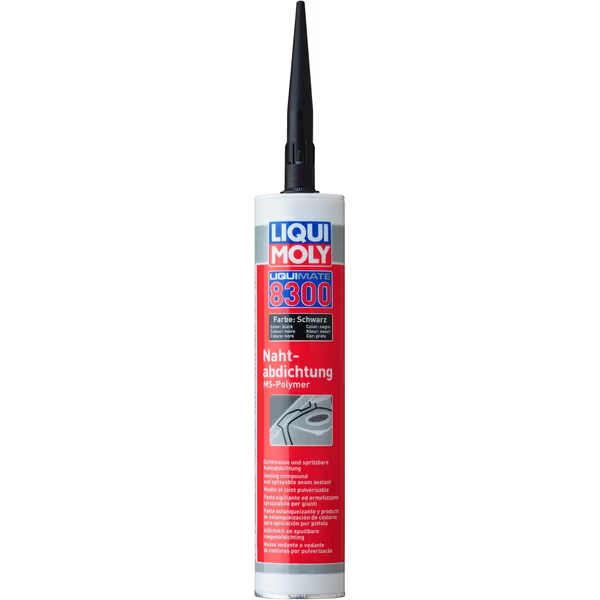
Price: from about £12 for a 310ml cartridge
Type: One-part sealant (owners describe it as MS polymer), cartridge gun or pneumatic sealant gun
The highest-rated sealer on our list. Liqui Moly sell it specifically as a body seam and underbody sealant, and owners on Amazon UK have used it to cure boot and roof-line leaks on everything from a Lexus to a Range Rover L322.
Pros:
- Highest average rating here, from a decent number of owners
- Runnier than a PU, which reviewers say helps it work into gaps
- One owner sprayed it onto a sill and wheel arch with a pneumatic gun and also stippled it with a short brush, which lets you copy a factory texture
- The same owner found it matched a Würth sealer for roughly half the price
Cons:
- "Very runny" is the most common criticism, so it will sag on a vertical seam if you lay it on thick
- Black only, which may need an extra coat of primer before a light colour
Our Verdict: The pick for seams you want the sealer to flow into rather than sit on, and for anyone who wants to spray or stipple a factory-style finish on sills and arches. Keep a cartridge of Tiger Seal for vertical joints.
Buy on Amazon3. Sika Sikaflex 221 (Black, 300ml) - Best Where It Must Also Bond
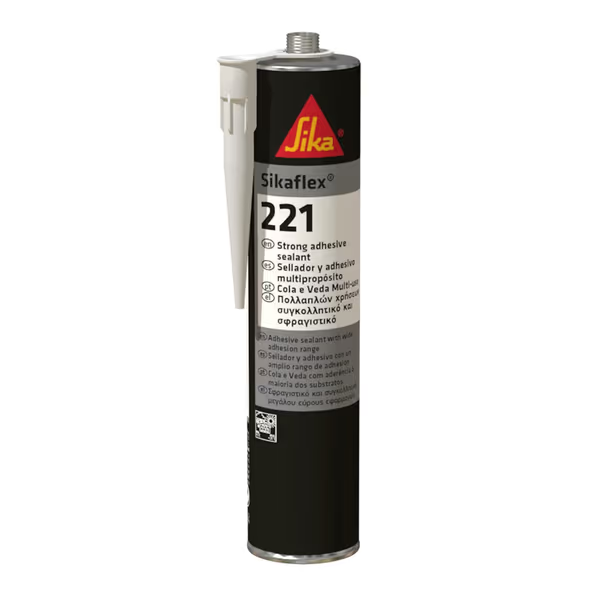
Price: from about £13 for a 300ml cartridge
Type: One-part polyurethane adhesive sealant, cartridge gun
Sikaflex 221 is a long-established multi-purpose adhesive sealant. Sika state it stays workable for up to 45 minutes, skins in about 60 minutes, cures with ambient moisture to an elastic seal that does not sag, and can be sanded and painted.
Pros:
- Long working time from the maker's data, handy for long seams or fitting trim
- Reviewers rate its adhesion as far stronger than DIY-shed sealants
- Land Rover owners in the reviews swear by it for sunroof and body joints
- Sandable and paintable once cured
Cons:
- Messy and very hard to remove from hands and tools, the top complaint in reviews
- Usually a little dearer per tube than Tiger Seal
- Some mixed reports on long-term durability in the review summary
Our Verdict: Choose Sikaflex 221 when the joint has to hold something in place as well as seal it, such as a bonded repair section, a trim strip or a panel lip. For plain seam sealing Tiger Seal does the same job for less.
Buy on Amazon4. Tetrosyl Cartridge Seam Sealer (310ml) - Budget Pick
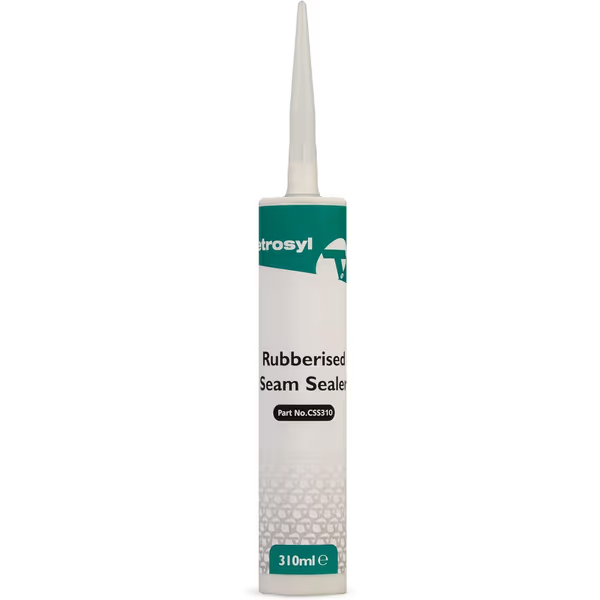
Price: varies by seller, usually among the cheapest cartridges on Amazon UK
Type: Synthetic rubber, solvent based, cartridge gun
Tetrosyl make a rubber-based seam sealer for overlap joints. They state it is non-slumping on vertical and horizontal seams, dries in about two hours at 20 degrees C and can be overcoated with cellulose, acrylic or other compliant paint systems.
Pros:
- Quick to overcoat compared with PU sealers, according to the maker
- Owners have used it to stop water getting into boots and around vents
- Cheap enough to keep a tube in the garage for small jobs
Cons:
- Reviewers say it goes on more liquid than they expected
- Strong solvent smell for days afterwards, so use it outside or with the door open
- One UK reviewer reported it cracking after 48 hours, and its rating is lower than the PU options
Our Verdict: Fine for a small repair where you want to paint the same afternoon. For a full restoration we would spend a pound or two more on Tiger Seal.
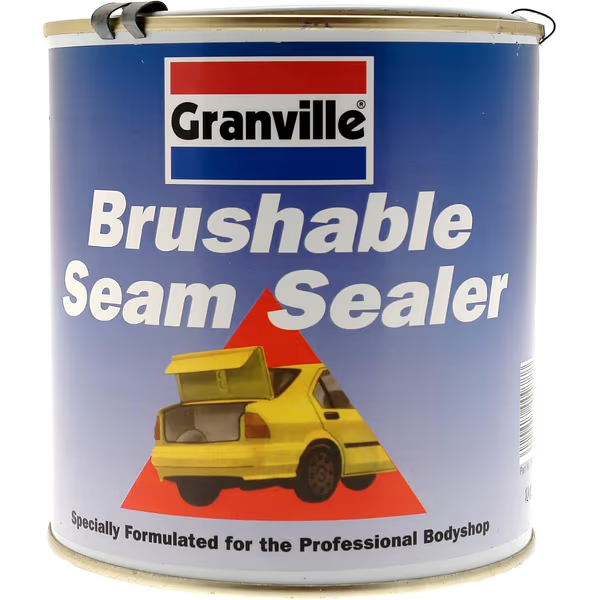
Buy on Amazon5. Granville 0978 Brushable Seam Sealer (1kg) - Best Brushable
Price: varies by seller for a 1kg tin
Type: Brush-on seam sealer
A tin of brushable sealer is the easiest way to get the brushed, slightly ridged look you see on original floor pans and boot floors, and to cover a long run of spot welds in one go. Granville's 0978 is the best-rated brushable sealer we found on Amazon UK with a meaningful number of reviews.
Pros:
- Brushes on to copy a factory finish on a classic
- 1kg goes a long way over wide overlaps and weld lines
- Reviewers say it covers well and is good value
Cons:
- The written reviews are short, so there is less owner detail than for the cartridges
- One reviewer found the tin only three-quarters full
- Not a substitute for a gunned bead where the gap is open; use both
Our Verdict: Buy it alongside a cartridge sealer if you are restoring a classic and want the underside to look right. Gun a bead into the joint, then brush over it.
Buy on AmazonComparison Table
| Sealer | Amazon UK rating | Type | Size | Best for |
|---|---|---|---|---|
| U-POL Tiger Seal | 4.6 (862) | 1K polyurethane | 310ml | General seam sealing |
| Liqui Moly Liquimate 8300 | 4.7 (304) | 1K sealant, runny | 310ml | Gaps, spraying, stippling |
| Sikaflex 221 | 4.6 (707) | 1K polyurethane | 300ml | Seal and bond |
| Tetrosyl Seam Sealer | 4.2 (94) | Synthetic rubber | 310ml | Small jobs, quick paint |
| Granville 0978 Brushable | 4.2 (78) | Brush-on | 1kg | Factory brushed finish |
Buying and Application Guide
Where seams need sealing on a classic
- Floor pans: where the floor meets the inner and outer sills, the transmission tunnel and the crossmembers
- Inner wings and bulkhead: the joints behind the headlamps and along the top of the inner wing
- Boot floor: the spare wheel well, the rear valance joint and the edges under the rear lights
- Sill closing panels and jacking points: where water runs down from the door shuts
- Drip rails and the windscreen and rear screen apertures: leaks here end up in the floor
If you are not sure where your model rots, our classic car rust inspection kit article show you where to look first.
How to apply seam sealer
- Get to clean metal. Remove old cracked sealer with a heat gun and scraper or a wire wheel, and deal with any rust underneath. Our surface preparation guide covers this.
- Prime. Etch or epoxy primer over bare steel, allowed to flash off as the primer maker states.
- Cut the nozzle small. A 3 to 5mm opening gives a bead you can tool. You can always cut it bigger.
- Push, do not pull. Pushing the gun along the seam drives sealer into the joint rather than laying it on top.
- Tool it. Smooth the bead with a gloved finger dipped in soapy water, or stipple it with a short brush for a factory texture.
- Leave drain holes open. Never seal over a factory drain or the bottom edge of a door or sill where water is meant to escape.
- Paint, then wax. Topcoat once the sealer has skinned or cured as the tube says, then inject cavity wax inside the box sections.
Protect yourself
Polyurethane sealers carry warnings for skin and breathing sensitisation, and solvent sealers give off strong vapour. Wear nitrile gloves, work with the garage door open, and read the safety data on the tube.
Kit you will also need
- A sturdy skeleton cartridge gun for 310ml tubes. Cheap guns flex and make an uneven bead.
- Disposable nitrile gloves and some white spirit or the sealer maker's cleaner for tools (not for skin).
- Masking tape either side of a visible seam if you want a crisp edge.
Frequently Asked Questions
Can I put seam sealer straight onto bare metal?
Most one-part seam sealers, including Tiger Seal, Sikaflex 221 and the synthetic rubber types, are meant to go over clean, primed metal. Bare steel under a bead of sealer has nothing stopping moisture that creeps in at the edges, so it can rust unseen. Put an etch or epoxy primer on first, let it flash off as the primer maker says, then seal. Two-part epoxy seam sealers are the exception: they are designed for bare metal, but they cost more and need a dual cartridge gun.
Can I use bathroom silicone instead of seam sealer?
No. Household silicone cannot be painted, stops paint and filler sticking anywhere it smears, and many types release acetic acid as they cure, which attacks bare steel. Once silicone contamination is on a panel it is hard to remove fully. Use a paintable polyurethane, MS polymer or rubber-based seam sealer made for bodywork.
What is the difference between U-POL Tiger Seal and Sikaflex 221?
Both are one-part, moisture-curing polyurethane adhesive sealants that stay flexible and can be painted, and both are used across the UK bodyshop trade. Tiger Seal is usually cheaper per tube and comes in grey, which suits primed seams. Sikaflex 221 gives a long working time (Sika quote up to 45 minutes) and is marketed as a stronger adhesive, which makes it the better pick when the joint has to hold something on as well as keep water out.
Brushable or cartridge seam sealer: which should I use?
Use a cartridge sealer for a neat bead along a joint, such as floor pan seams, inner wing seams and boot floor edges. Use a brushable sealer where you want to copy the brushed, slightly ridged factory look on a classic, or where you need to cover a wide overlap or a run of spot welds. Many restorers use both: a cartridge bead into the joint, then a brushed coat over it.
How long should I leave seam sealer before painting?
It depends on the chemistry, so follow the tube. As a guide from the makers' own data, Tetrosyl's rubber-based sealer can be overcoated after about two hours at 20 degrees C, and Sika state that Sikaflex 221 skins in about 60 minutes. Paint only once the sealer has at least skinned, and give polyurethane sealers longer if the tube says so. Cold, damp garages slow curing down a lot.
Should I seam seal before or after cavity wax?
Before. Seal the seams, paint, and only then inject cavity wax. Wax stops sealer and paint sticking, so if it gets on a seam first the sealer will not bond. The wax then protects the inside face of the seam that sealer cannot reach.
Summary
- Best overall: U-POL Tiger Seal Grey, 4.6 from 862 ratings. The trade standard.
- Best for gaps and spraying: Liqui Moly Liquimate 8300, 4.7 from 304 ratings.
- Best where it must also bond: Sikaflex 221, 4.6 from 707 ratings.
- Budget: Tetrosyl Cartridge Seam Sealer, 4.2 from 94 ratings.
- Best brushable: Granville 0978, 4.2 from 78 ratings.
Whichever you choose, the sealer is only as good as the metal and primer under it. Treat the rust, prime the joint, seal it, paint it and wax the inside, and a welded repair will outlast the rest of the car.