Classic Car Rust Inspection Kit: What to Take to a Viewing
Table of Contents
Most rusty classics are bought on a bright afternoon by someone who looked at the paint. The rot is underneath: in the sills, the floor edges and the backs of the wheel arches, often under a fresh coat of underseal or a skim of filler. Six cheap tools, all small enough for a jacket pocket and a carrier bag, will show you most of it in half an hour. The whole kit costs under £50.
Why Take a Kit
Bodywork is the expensive part of a classic. An engine can be rebuilt for a known price; new sills, floors and inner wings on a car that looked sound can cost more than the car. Sellers are rarely lying outright, but many genuinely do not know what is under the underseal, and some repairs were done to sell rather than to last.
You do not need a lift or a garage. You need to see into dark places, test whether a panel is steel or filler, and feel whether metal is solid. That is what this kit does.
How the Kit Works
- Torch: lights the underside, and held low along a panel it shows ripples and sanding marks from filler.
- Weak magnet: sticks to steel, drops off thick filler.
- Inspection mirror: shows you the back of a sill, the inside lip of an arch and the top of a chassis leg without lying under the car.
- Awl: a gentle press tells sound steel from metal that has rusted thin.
- Gloves: undersides are filthy and often waxy; gloves let you feel seams without carrying it home.
- Knee mat: you will spend most of the viewing kneeling on someone's drive.
How We Chose
This is a kit, not a league table, so we picked one best item for each job and an alternative where it really matters. We have not lab-tested these tools. For each job we:
- Searched Amazon UK and looked at average star rating and number of ratings together, favouring products with hundreds or thousands of owners.
- Kept to cheap items in UK stock, because a viewing kit should not cost more than a decent lunch out.
- Chose the specification that suits the job, which is not always the strongest or brightest. A weak magnet is better than a strong one for finding filler, for example.
- Read the UK reviews and noted the points owners repeat. Where a pro or con comes from reviews, we say so.
Ratings, review counts and prices are as shown on Amazon UK on 3 November 2026.
The Kit
1. LED Inspection Torch: OSRAM LEDinspect POCKET200
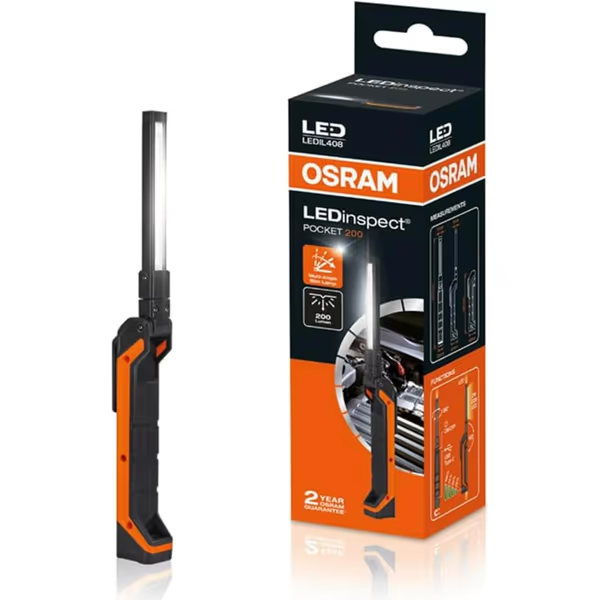
Price: about £21
Why this one: slim, bright, daylight-coloured light that fits between a tyre and an arch
A phone torch is not enough. You need a flat, even light you can slide into the gap behind a wheel or lay along a sill. OSRAM's POCKET200 is a slim rechargeable bar light with a 6500K (daylight) colour, a magnet and a head that folds, so you can stick it to a wheel hub and have both hands free.
Pros:
- Daylight colour temperature shows rust and fresh paint in their true colours
- Magnet and folding head for hands-free use under arches (praised in reviews)
- USB-C charging and a bright bar beam, according to owners
Cons:
- Battery life gets mixed reviews: charge it the night before
- A few owners report the hinge breaking, so do not lever with it
Our Verdict: The most useful single item in the kit. Buy this before anything else.
Buy on AmazonBudget alternative: Blukar Ultra Slim Pen Torch
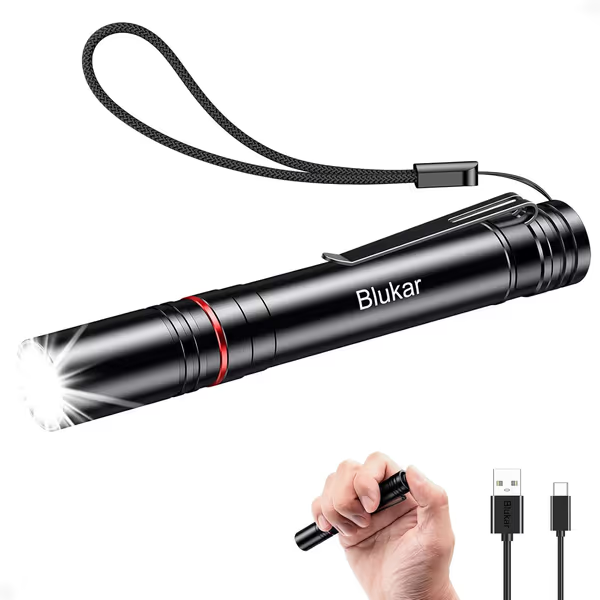
Rating: 4.7/5 from 1,534 ratings. Price: about £8. A small rechargeable pen torch with a zoomable beam, clip and USB-C charging. Owners rate it as surprisingly bright for the price. It is a spot beam rather than a bar light, so it is better for peering into drain holes and seams than for lighting a whole arch.
Buy on Amazon2. Weak Pocket Magnet: Blue Spot Tools 07327 Telescopic Magnet (0.9kg)
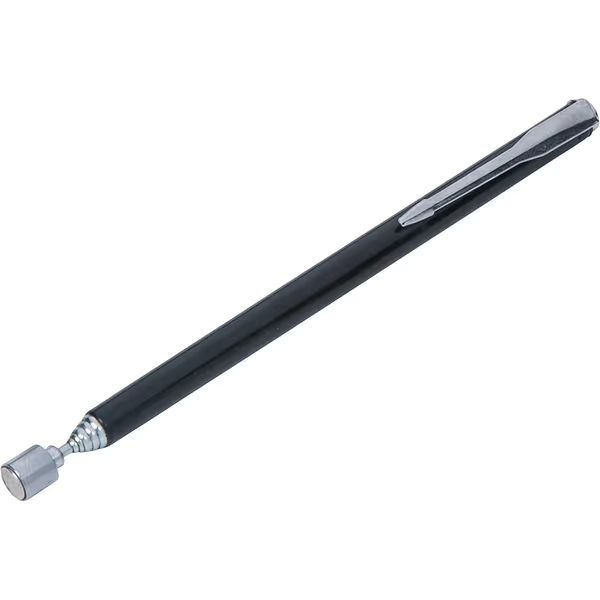
Price: about £4
Why this one: the magnet is deliberately weak, and it is the size of a pen
The old trick is to slide a magnet over the bodywork and see where it lets go. A strong magnet grips straight through a few millimetres of filler and tells you nothing. This Blue Spot pick-up tool has a small 0.9kg (2lb) pull magnet on the end of a telescopic pen, which is weak enough to slip off where filler has been built up, and it telescopes to reach the lower sills and rear arches.
Pros:
- Weak pull is right for this job
- Pocket-sized with a clip, which reviewers like
- Very cheap and doubles as a dropped-nut retriever in the engine bay
Cons:
- Several reviewers mention durability problems with the telescopic section
- The bare magnet can mark paint: wrap it in a single layer of insulating tape and ask before you use it
Our Verdict: The cheapest useful filler detector you can buy. Wrap the tip, keep it moving, and note every spot where it lets go.
Buy on Amazon3. Telescopic Inspection Mirror: Rolson 60515 with 2 LEDs
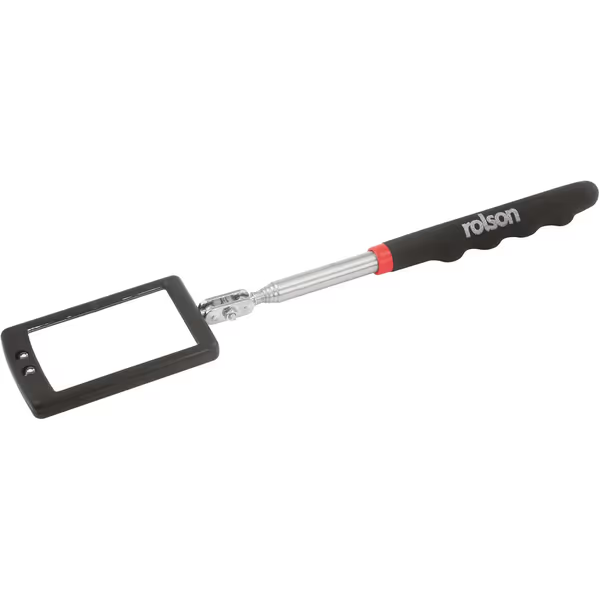
Price: about £5
Why this one: built-in lights and a long reach for the price
The places that rot first are the ones you cannot see straight on: the inner face of a sill, the top of a rear chassis leg, the inside lip of a wheel arch, the back of a front valance. A telescopic mirror lets you look round the corner. Rolson's has a 42 x 65mm rectangular head and two LEDs that light what you are looking at; one reviewer measured it at 770mm fully extended.
Pros:
- Built-in LEDs mean you do not need a third hand for the torch
- Huge review base for a cheap tool
- Long enough to reach the middle of a floor from the side of the car
Cons:
- Owners note the LEDs can glare in the mirror if the angle is wrong: tilt the head slightly
- Small mirror, so you check an area in several passes
Our Verdict: The tool that finds the rot sellers do not know about. Five pounds well spent.
Buy on AmazonAlternative: Amtech Telescopic Inspection Mirror
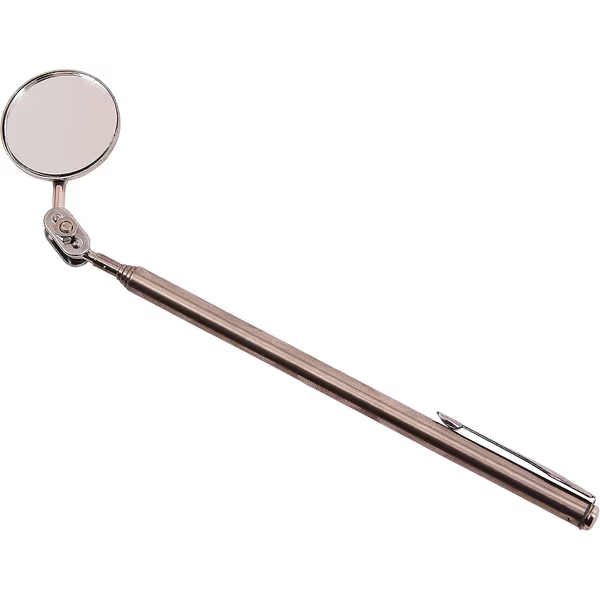
Rating: 4.2/5 from 327 ratings. Price: about £4. A round mirror on a 360 degree swivel head with 450mm reach and no lights. Reviewers like the adjustable head; some find the mirror small. Pick it if you prefer a round head that fits through smaller gaps and will hold the torch in your other hand.
Buy on Amazon4. Awl for Probing: Draper Soft Grip Carpenters Awl
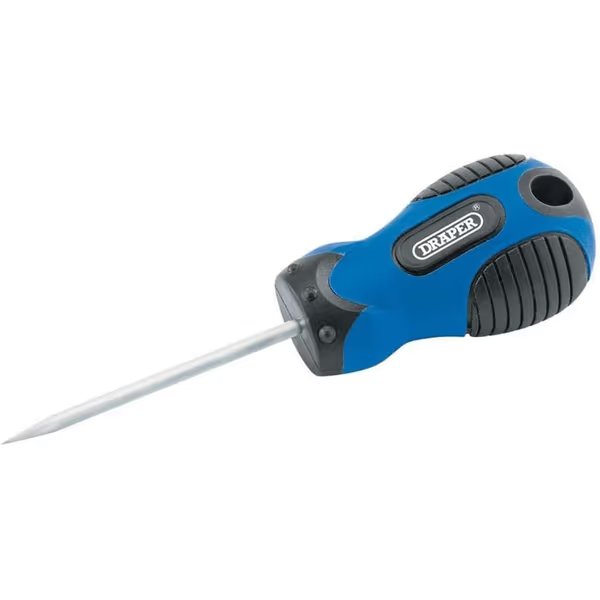
Price: about £4
Why this one: short, controllable blade and a handle you can push hard on
A probe tells you what a torch cannot: whether the steel is still steel. Draper's carpenters awl has a 75mm blade, 3mm at the base and tapering to a point, on a soft grip handle. The short blade gives you control, so you can press firmly without slipping and gouging the paint.
Pros:
- Short blade is easy to control on a sill or floor edge
- Comfortable grip, according to reviewers
- UK tool brand, very cheap
Cons:
- The point is sharp. For viewings, take the edge off it with a few strokes of a file so it probes rather than pierces
- Too short to reach deep into a chassis rail
Our Verdict: Ask permission, press rather than stab, and concentrate on the places listed below. Sound metal will not give; rot will.
Buy on AmazonAlternative: Wera 1427 Awl
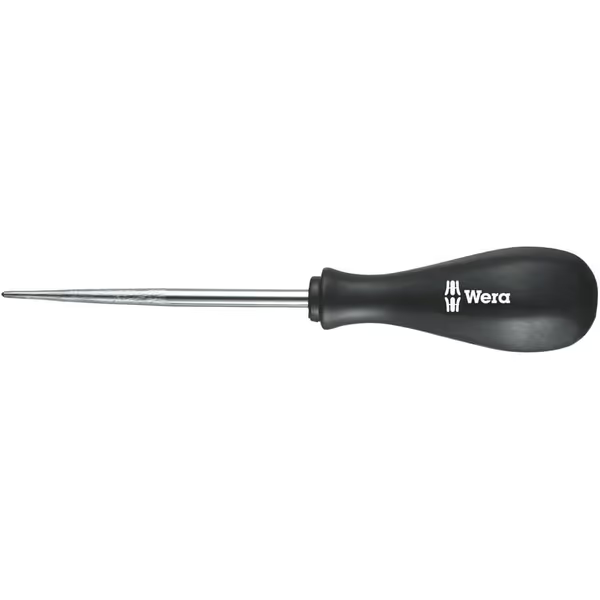
Rating: 4.7/5 from 1,331 ratings. Price: about £11. A better-made awl with the blade running through the handle, as owners point out, so you can push hard without it working loose. Worth the extra if you will use it in the workshop too.
Buy on Amazon5. Nitrile Gloves: Xtremeauto Diamond Grip
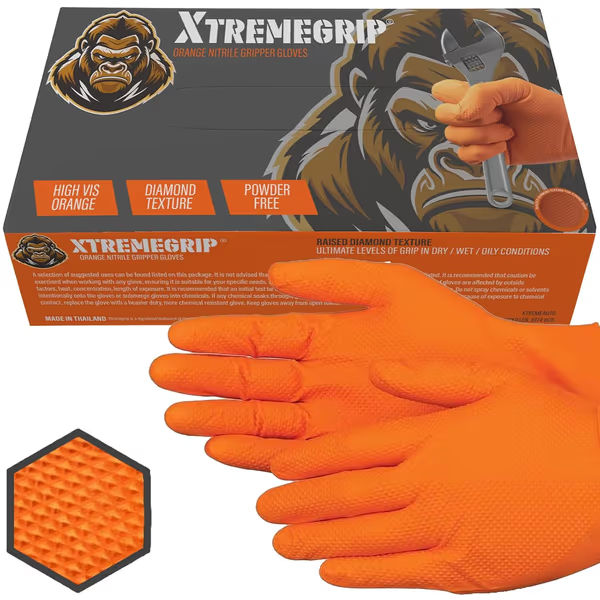
Price: about £12 a box (roughly 24p a glove)
Why this one: thick enough not to split on a rusty edge, with grip that works when wet
Feeling along a sill seam or the inside of an arch lip is part of the inspection, and undersides are covered in road dirt, old wax and sometimes sharp rust. Thin gloves split on the first jagged edge. These are thicker, diamond-textured nitrile gloves that owners use for car and bike work.
Pros:
- Reviewers say they resist tearing far better than standard disposables
- Textured grip that holds even when wet
- Useful long after the viewing, including for seam sealer and wax work
Cons:
- Dearer than plain thin nitrile gloves
- Check you order the right size; the listing offers several
Our Verdict: Put two pairs in your pocket. You will use the rest of the box in the garage.
Buy on Amazon6. Knee Mat: Portwest KP05 Kneeling Pad
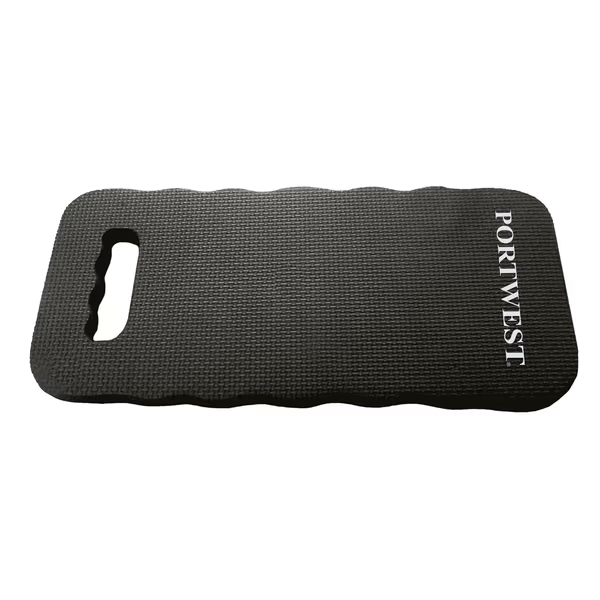
Price: about £4
Why this one: light, cheap, and it has a handle
You will kneel at every wheel and lie half under the car at the sills. On gravel or a wet drive that gets old fast, and people who are uncomfortable rush. Portwest's EVA foam pad weighs next to nothing and has a cut-out handle so it travels with the rest of the kit.
Pros:
- Good value and durable, according to reviewers
- Wipe-clean foam that does not soak up a wet drive
Cons:
- Several owners find it on the small side
- Opinions on firmness are mixed
Our Verdict: Cheap comfort that makes you slower and more thorough.
Buy on AmazonThicker alternative: Ohuhu Extra Thick Kneeling Pad
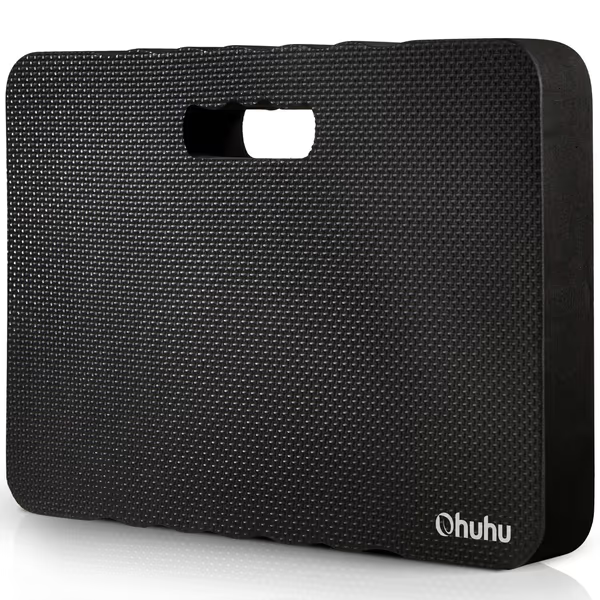
Rating: 4.7/5 from 2,812 ratings. Price: about £10. At 43 x 28 x 4cm it is bigger and much thicker than the Portwest. Reviewers, including one professional bathroom fitter who kneels all day, rate it as comfortable for long sessions. Choose it if you have bad knees or plan to use it in the garage.
Buy on AmazonKit List at a Glance
| Job | Our pick | Amazon UK rating | Approx. price |
|---|---|---|---|
| Light | OSRAM LEDinspect POCKET200 | 4.6 (1,244) | £21 |
| Filler check | Blue Spot 07327 magnet (0.9kg) | 4.5 (1,959) | £4 |
| Hidden areas | Rolson 60515 LED mirror | 4.4 (2,989) | £5 |
| Probing | Draper soft grip awl | 4.7 (2,203) | £4 |
| Hands | Xtremeauto nitrile gloves | 4.7 (973) | £12 |
| Knees | Portwest KP05 kneeling pad | 4.5 (1,098) | £4 |
The full kit comes to about £50, or under £40 with the Blukar pen torch in place of the OSRAM.
How to Use the Kit at a Viewing
Before you touch anything
- Check the MOT history on GOV.UK and note any corrosion advisories.
- Read up on your model's known rust spots so you know where to spend your time.
- Tell the seller you would like to look underneath and gently probe a few areas. Wrap the magnet tip in tape so it cannot scratch.
- View in daylight and in the dry if you can. Rain hides ripples and fresh paint.
Walk round with the torch and magnet
Hold the torch almost flat against each panel and look along the beam. Filler shows as a wavy reflection, sanding scratches or a slightly different texture. Then run the wrapped magnet along the lower 20cm of every panel: the bottoms of the doors, front wings behind the wheels, rear arches and the outer sills. Mark in your notes every spot where it drops off. One spot can be an old dent; a line of them along a sill is a repair.
Where to probe: sills
- The bottom edge of the outer sill along its full length, especially the last 15cm at each end
- Jacking points and the area around them
- The seam where the sill meets the floor, from underneath
- The inner sill face, using the mirror and torch from under the car
- The closing panels at each end of the sill, behind the front and rear wheels
On many classics the sills are structural. A sill that gives under a firm press, or has been plated over the original, is a welding job, not a touch-up.
Where to probe: floors
- The outer edges where the floor meets the sills
- Under the front footwells, where water from leaking screens and heater boxes collects
- Around seat mounts and seat belt anchor points
- Lift the carpets if you are allowed and look for damp, fresh patches or daylight
- The boot floor and spare wheel well, from inside and underneath
Where to probe: wheel arches
- The arch lip, inside and out: run a gloved finger along it and feel for crunch or bubbles
- The inner arch behind the wheel, using the mirror to see the top of the arch
- Where the front inner wing meets the bulkhead and the sill
- Rear arches where they join the boot floor and rear valance
Fresh underseal and new carpets
Neither is a bad sign on its own, but both can hide recent repairs or rot. Press gently at the edges of fresh underseal. Solid steel feels hard; rot underneath feels soft or crunchy. If what you find needs welding, our MIG welder guide and seam sealer guide will give you a sense of what the repair involves.
Take photos
Photograph everything you find with your phone, including the mirror views. It is much easier to talk price, or walk away, when you have the pictures in front of you rather than a memory of a dark wheel arch.
Frequently Asked Questions
Is it acceptable to probe a car with an awl at a viewing?
Ask the seller first, and press rather than stab. A firm push with the tip on a sill, floor edge or chassis leg will not mark sound steel but will sink into metal that has rusted thin. Most honest sellers of classics expect it. If a seller refuses any probing of the underside, treat that as information about the car.
Will a magnet always find filler?
No. A weak magnet drops off where filler is thick, typically a few millimetres or more, which is exactly the kind of repair that hides rot. A thin skim over a sound panel may still hold the magnet. It also tells you nothing on panels that were never steel, such as aluminium or glassfibre, so know what your model is made of before you start.
Should I buy a paint thickness gauge instead of a magnet?
A proper electronic gauge measures paint and filler depth in microns and is worth having if you view a lot of cars. The cheap magnetic pen gauges on Amazon UK had very few reviews when we looked, so we did not recommend one. For a single viewing, a weak magnet and a good torch held low along the panel will find most filler.
Does fresh underseal mean a car is hiding rust?
Not always, but fresh, thick underseal on a car being sold deserves a closer look. Probe its edges at the sills, jacking points and floor seams. Sound metal under underseal feels hard; rotten metal under it feels soft or crunchy, and the coating may flex or crack when pressed.
What else should I check before I go?
Look up the car's MOT history on GOV.UK using its registration. Advisories that mention corrosion, and where they appear year after year, tell you where to point the torch. Then read up on the model's known rust spots so you know where to look first.
Summary
For about £50 you can carry a kit that finds most of the rust and filler a seller does not mention: an OSRAM inspection light, a weak Blue Spot magnet, a Rolson LED mirror, a Draper awl, Xtremeauto gloves and a Portwest knee pad. Use them on the sills, floors and arches first, take photos, and you will go home knowing what you are buying.