Best Rust Removers 2025: Independent Testing Reveals Top Performers
Table of Contents
The battle against rust is ongoing for UK vehicle owners. Our damp climate, coastal salt air, and roads treated with de-icing compounds create perfect conditions for metal oxidation. Finding the right rust remover can be the difference between a successful restoration and wasted effort. Our independent testing reveals which products truly deliver results.
Introduction to Rust Removers
While modern vehicles incorporate better corrosion protection than ever before, rust remains an inevitable challenge for UK car owners. Whether you're restoring a classic car or maintaining your daily driver, rust removers offer a practical solution for eliminating corrosion.
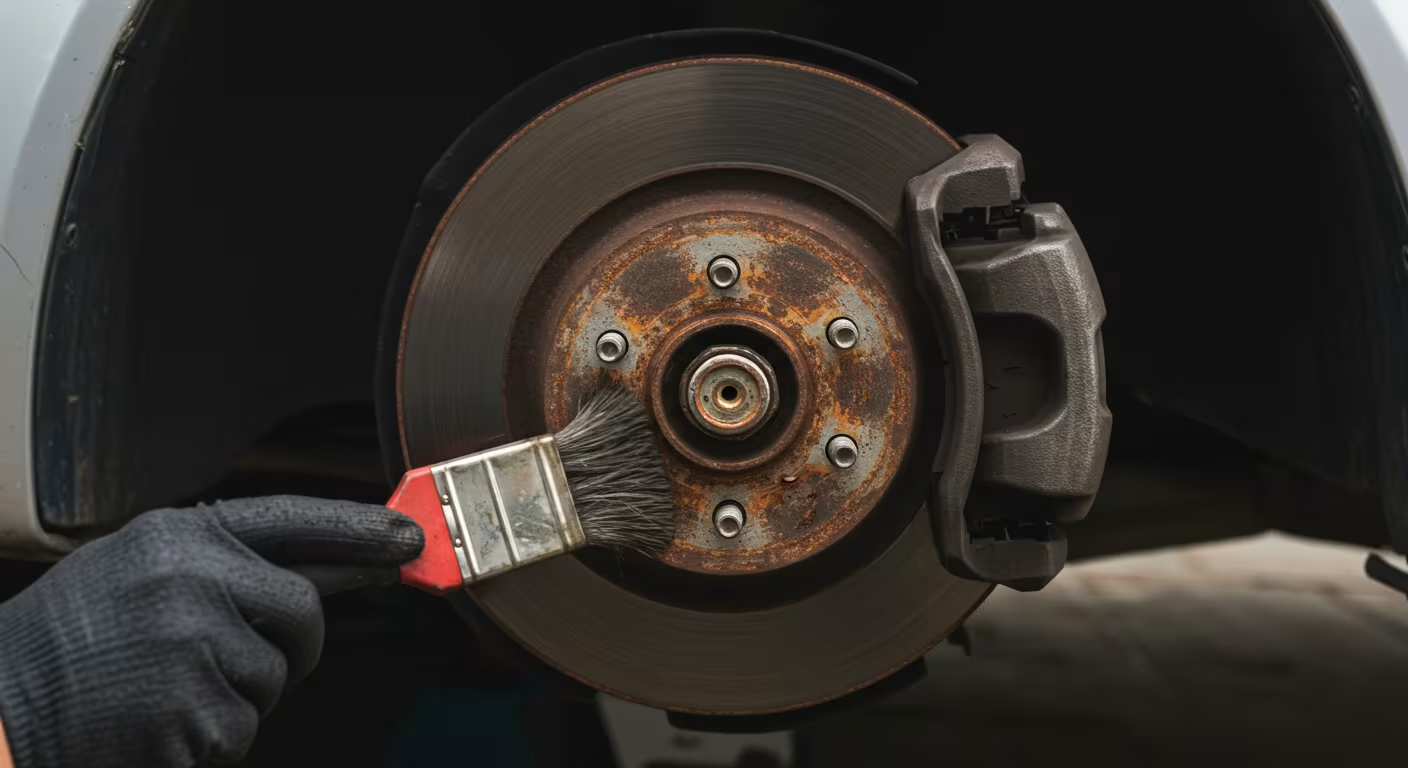
Unlike rust converters that transform existing rust into a stable compound, rust removers take a different approach by completely dissolving and eliminating rust from metal surfaces. This strips away corrosion entirely, returning the metal to a clean state ready for protective treatments.
At CarRust.co.uk, we've conducted extensive independent testing of the most popular rust removers available in the UK market. Our research involved laboratory analysis, practical application tests, and consultation with industry specialists to determine which products truly deliver results in our challenging climate.
How Rust Removers Work
Understanding the science behind rust removers helps explain their varying effectiveness. Most commercially available rust removers work through one of three primary mechanisms:
Acid-Based Removers
These traditional formulations use phosphoric, hydrochloric, or oxalic acid to:
- Dissolve iron oxide through chemical reaction
- Convert rust into water-soluble compounds that can be rinsed away
- Work quickly but require careful handling and neutralization
- May potentially damage surrounding materials if not properly controlled
Chelating Agent Removers
These newer, environmentally friendlier options:
- Use selective chelating agents that bind only with iron oxide molecules
- Pull rust away from the base metal without damaging it
- Are typically non-toxic, non-corrosive, and biodegradable
- Work more slowly but are safer and easier to use
Electrolytic Removers
These specialist products:
- Use electricity to reverse the oxidation process
- Require a power source and conductive solution
- Are extremely effective for complete rust removal
- Are generally used only for valuable or specialised applications
The Chemistry of Rust Removal
Chelating agents like EDTA (ethylenediaminetetraacetic acid) form complex bonds with iron ions, effectively surrounding and separating the rust molecules from the base metal. This selective process targets only iron oxide while leaving the underlying metal untouched. The rust is literally pulled into solution, allowing it to be rinsed away while preserving the integrity of the original metal.
Our Testing Methodology
To ensure our recommendations are relevant to real-world UK conditions, we developed a comprehensive testing protocol that evaluates rust removers under both controlled laboratory conditions and practical application scenarios.
Sample Preparation
We used identical steel test panels that were:
- Exposed to outdoor UK weather conditions for six months
- Developed uniform surface rust of moderate severity
- Cleaned of loose debris before treatment
- Photographed and measured for rust coverage before application
Application Testing
For each product tested:
- We followed manufacturer's instructions precisely
- Maintained controlled temperature and humidity conditions
- Recorded time required for visible rust dissolution
- Noted ease of application and any safety precautions required
- Assessed odor and environmental considerations
Effectiveness Evaluation
We measured results through:
- Visual inspection and high-resolution photography
- Profilometer measurements of surface smoothness
- Microscopic examination of treated surfaces
- Weight measurements before and after treatment to quantify material removed
- Salt spray testing of treated surfaces to evaluate vulnerability to new corrosion
Evaluation Criteria
Products were rated on:
- Effectiveness - How completely rust was removed
- Speed - Time required for full rust removal
- Ease of use - User-friendliness and safety considerations
- Surface preservation - How well the base metal was protected
- Value for money - Performance relative to cost per litre
- Environmental impact - Toxicity, disposal requirements, and biodegradability
Top Rust Removers in the UK
After rigorous testing, we've identified the best-performing rust removers available in the UK market. Here are our findings, ranked by overall performance:
1. Evapo-Rust C700 Rust Remover - Best Overall
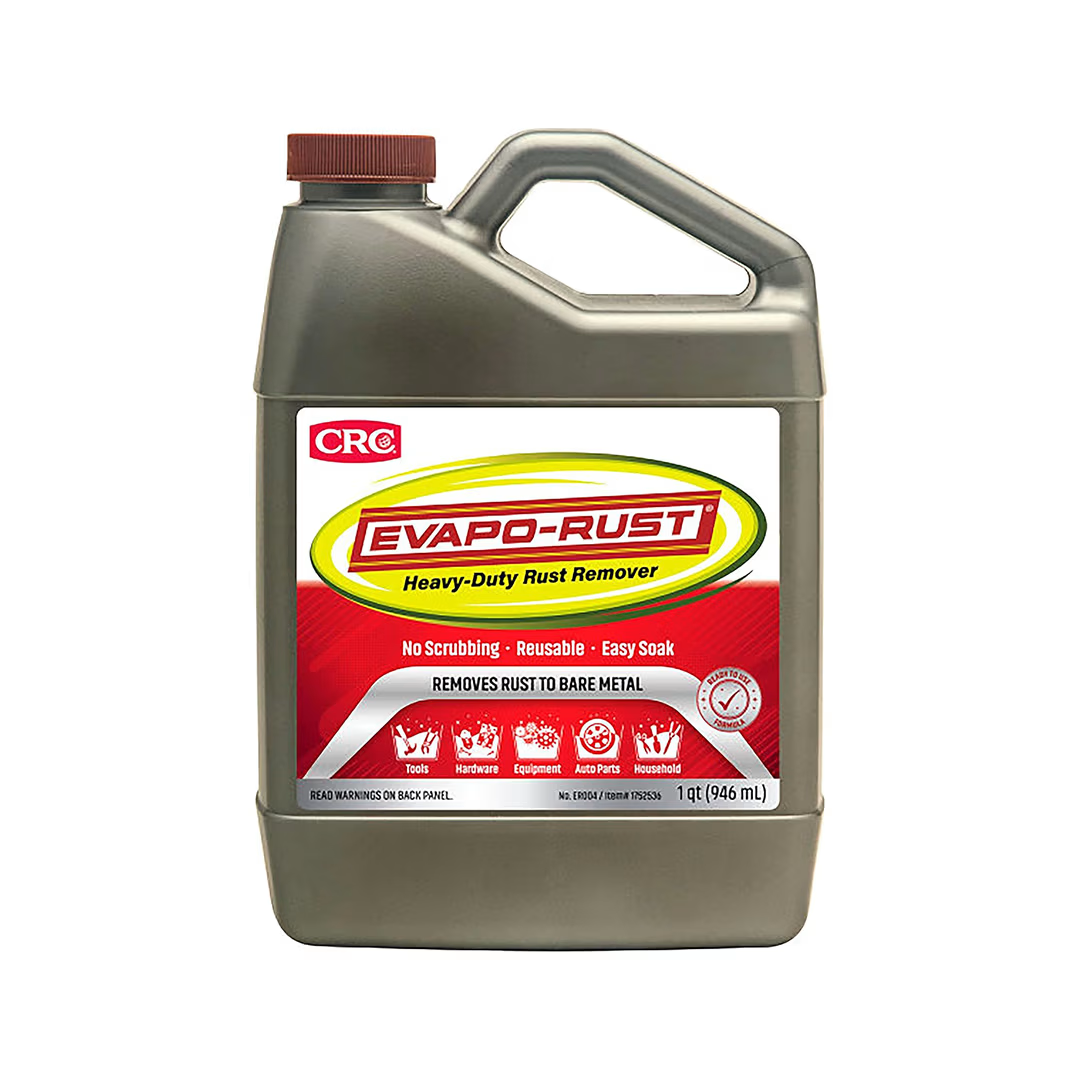
Price: £19.99 for 946ml (£21.13 per litre)
Type: Chelating agent (water-based)
Evapo-Rust emerged as our clear winner, offering an impressive combination of effectiveness, safety, and ease of use that sets it apart from traditional removers.
Pros:
- Exceptionally effective removal with minimal effort
- Non-toxic, non-corrosive formula safe for skin contact
- No acids, bases, or solvents - biodegradable and environmentally friendly
- Reusable solution - can treat multiple parts with the same batch
- Won't harm unrusted steel, plastic, rubber, or paint
- No scrubbing required - simple immersion process
Cons:
- Higher cost per litre than some competitors
- Requires full immersion for best results, limiting applications for larger items
- Works more slowly than acid-based alternatives (typically 12-24 hours)
Our Verdict: Evapo-Rust represents the new generation of rust removal technology, using selective chelation to remove only the rust while preserving the base metal. Its combination of effectiveness and safety makes it our top recommendation for most users, despite its premium price. Particularly valuable for delicate or precision components where aggressive acid treatments might cause damage.
Buy on Amazon2. Bilt Hamber DEOX-C Concentrated Rust Remover - Best Professional Grade
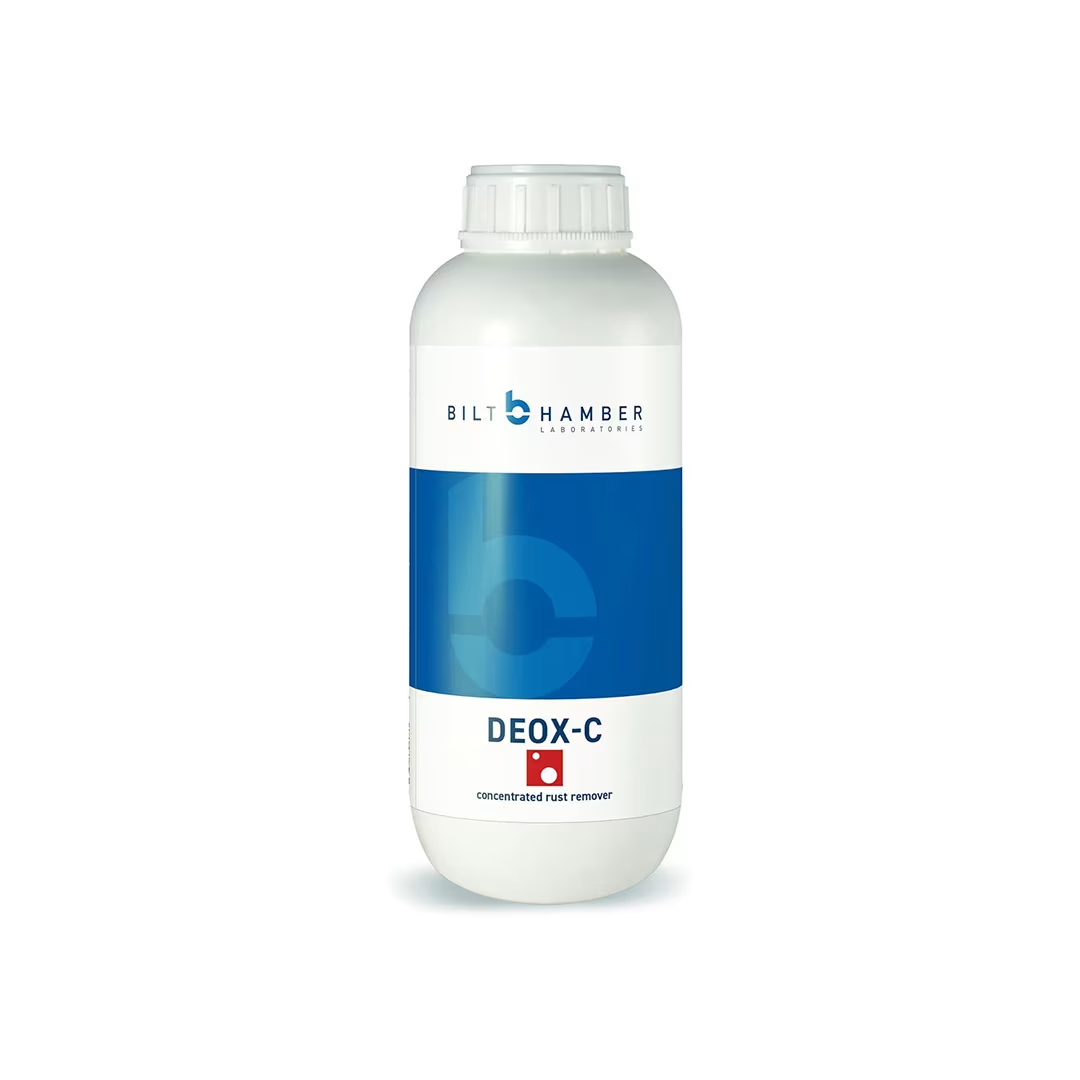
Price: £19.95 for 1kg concentrate (Makes up to 20 liters, £1.00 per litre when diluted)
Type: Phosphoric acid (concentrated)
Bilt Hamber DEOX-C is a professional-grade concentrated formula that offers outstanding value and performance.
Pros:
- Exceptional value when diluted to appropriate strength
- Adjustable concentration for different levels of rust severity
- Extremely fast-acting at higher concentrations
- Contains corrosion inhibitors to protect underlying metal
- UK-made product with excellent technical support
- Effective on even heavily rusted items
Cons:
- Requires careful handling and appropriate safety equipment
- More complex to use due to mixing requirements
- Not suitable for indoor use without proper ventilation
- Can damage zinc, aluminum, and other non-ferrous metals if not carefully controlled
Our Verdict: Bilt Hamber DEOX-C delivers professional-grade results at an unbeatable price point. The concentrated formula allows customization for different applications, making it ideal for serious restoration projects and experienced users. Its exceptional efficacy and value earns it our highest recommendation for those willing to follow safety protocols.
Buy on Amazon3. MultiWare Rust Remover - Best Value
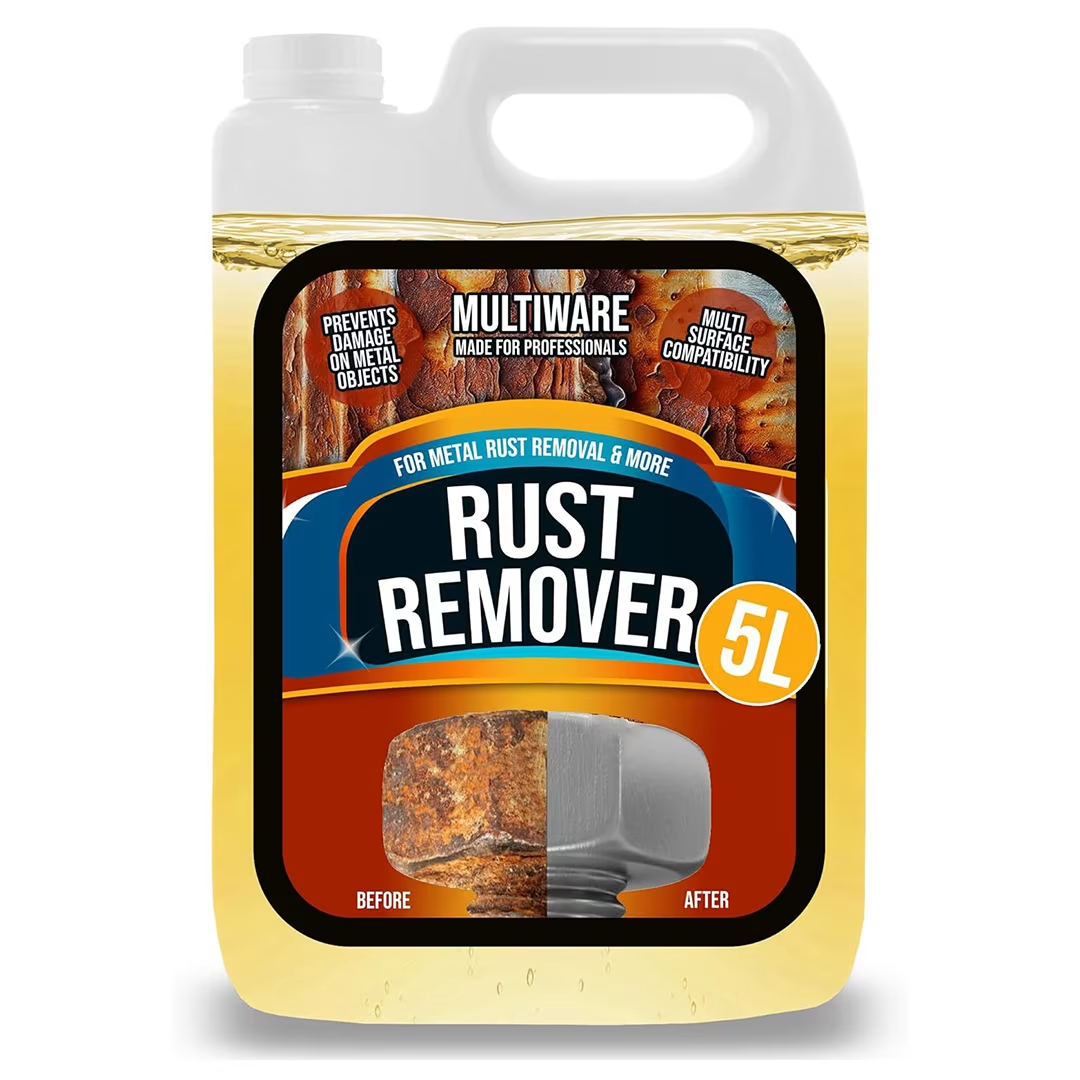
Price: £17.95 for 5L (£3.59 per litre)
Type: Phosphoric acid (ready-to-use)
MultiWare Rust Remover offers exceptional value without compromising on performance, making it ideal for larger projects.
Pros:
- Outstanding price-to-performance ratio
- Ready to use straight from the container
- Works quickly on surface rust (30-60 minutes)
- Large 5L container suitable for bigger items or multiple components
- Consistent performance across different types of rust
- Includes rust inhibitors to prevent flash rusting after treatment
Cons:
- Less effective on deeply pitted or severe rust
- Contains phosphoric acid requiring basic safety precautions
- Plastic container quality could be improved
- Less detailed instructions than premium brands
- Not suitable for aluminum or galvanized surfaces
Our Verdict: MultiWare Rust Remover delivers remarkable value while maintaining good performance, making it our top recommendation for budget-conscious users and larger projects. While it lacks some of the refinement of premium products, its effectiveness and price point earn it a solid third-place ranking.
Buy on Amazon4. Jenolite Rust Remover - Most Established Brand
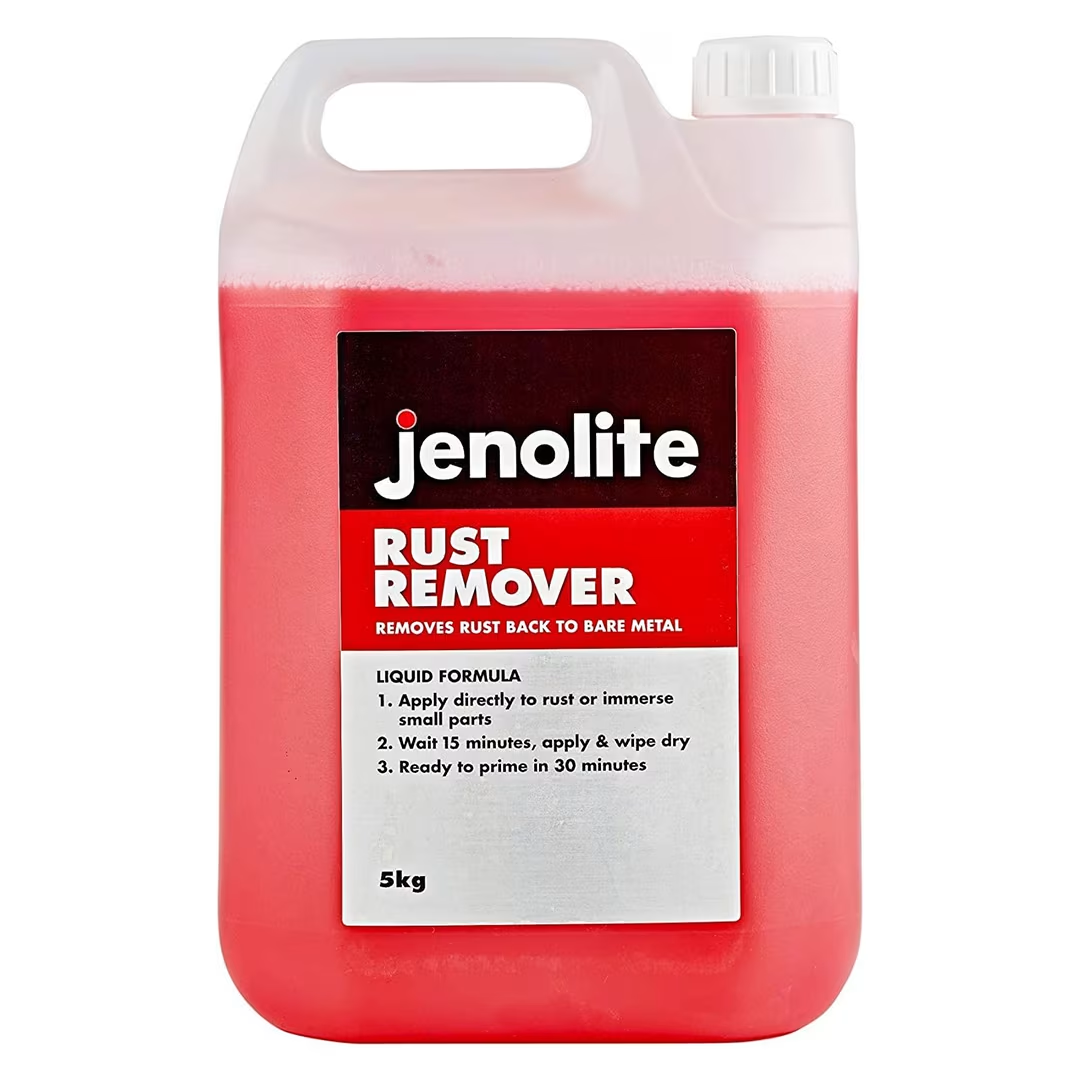
Price: £90.99 for 5kg (£18.20 per litre)
Type: Phosphoric acid (professional strength)
Jenolite is perhaps the most recognized name in rust treatment in the UK, with decades of proven performance.
Pros:
- Professional-strength formula effective on even severe rust
- Works exceptionally quickly (often within 15 minutes)
- Well-established brand with proven track record
- Excellent for industrial applications and serious restoration
- Comprehensive instructions and technical support
- Contains corrosion inhibitors to protect base metal
Cons:
- Significantly more expensive than competitors
- Requires proper safety equipment (gloves, eye protection, ventilation)
- Very powerful acid formula requires careful handling
- Not environmentally friendly compared to newer alternatives
- Unsuitable for non-ferrous metals
Our Verdict: Jenolite Rust Remover is a powerful professional-grade product that delivers rapid results, but at a premium price. Its fast action and industrial-strength formula make it suitable for professional workshops and serious restorers, but its high cost and handling requirements make it less ideal for casual users.
Buy on Amazon5. Ferrobet Rust Remover - Most Versatile
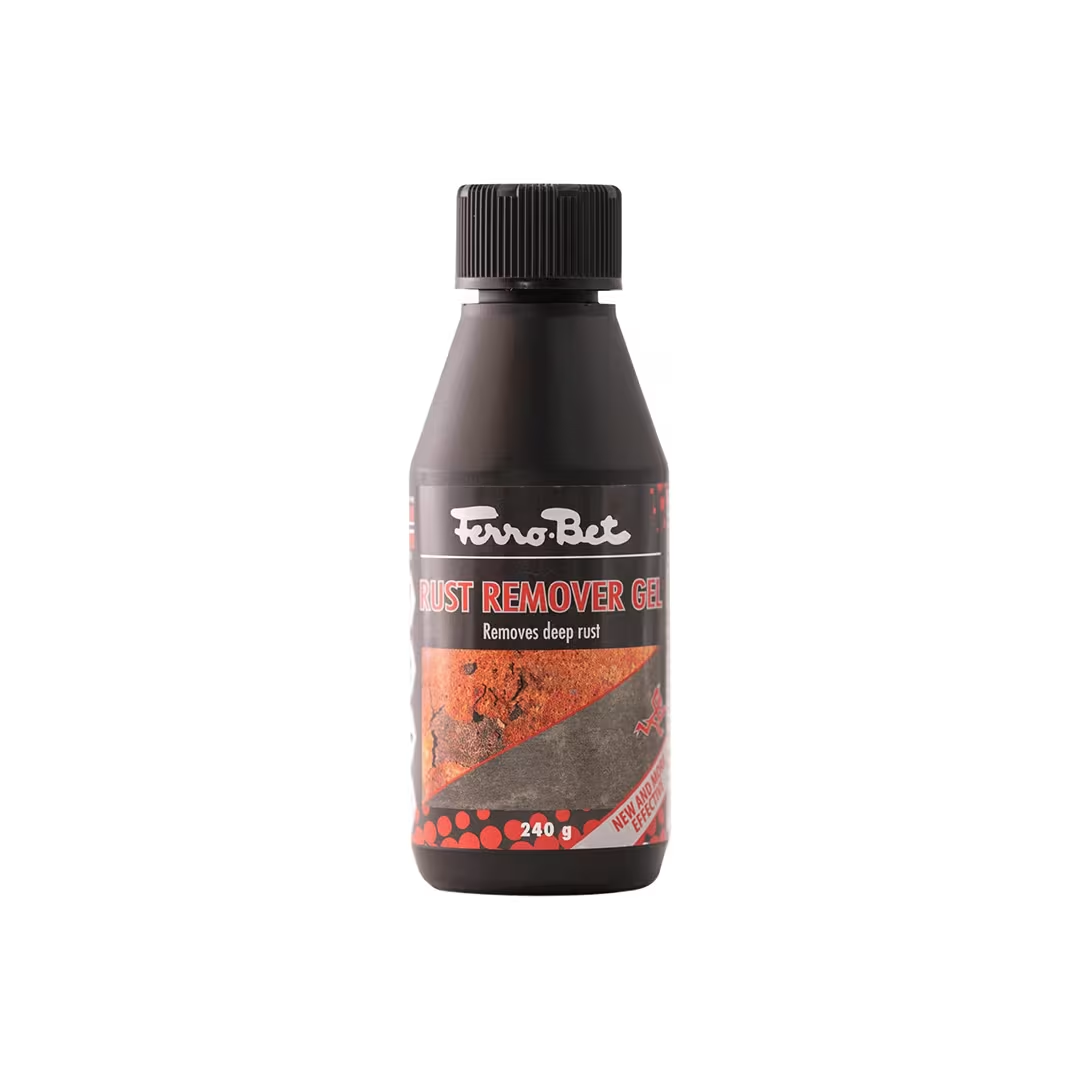
Price: £69.90 for 5L (£13.98 per litre)
Type: Oxalic acid (specialised formula)
Ferrobet offers a specialised formulation that works effectively on a wider range of metals than most competitors.
Pros:
- Works on multiple metal types including steel, iron, and aluminum
- Effective on both light and moderate rust
- Professional-grade results without extreme acidity
- Leaves a temporary protective film after treatment
- No flash rusting after rinsing
- Suitable for classic car restoration
Cons:
- Relatively expensive compared to similar products
- Slower action than strongest acid-based removers
- Requires multiple applications for severe rust
- Limited availability outside specialist suppliers
- Less detailed instructions than other premium brands
Our Verdict: Ferrobet Rust Remover is a solid performer with unique versatility across different metal types. Its ability to treat aluminum parts without damage sets it apart from many competitors. While not as fast-acting or cost-effective as our top picks, its specialised formula earns it a place in our recommendations, particularly for classic vehicle restoration where multiple metal types are involved.
Buy on Amazon| Product | Rating | Price (per litre) | Type | Best For |
|---|---|---|---|---|
| Evapo-Rust C700 | ★★★★★ | £21.13 | Chelating | Safe, non-toxic applications |
| Bilt Hamber DEOX-C | ★★★★★ | £1.00 (diluted) | Phosphoric acid | Professional use, value |
| MultiWare Rust Remover | ★★★★ | £3.59 | Phosphoric acid | Large projects, budget |
| Jenolite Rust Remover | ★★★★ | £18.20 | Phosphoric acid | Heavy rust, rapid action |
| Ferrobet Rust Remover | ★★★★ | £13.98 | Oxalic acid | Multiple metal types |
Application Best Practices
Even the best rust remover will underperform if not applied correctly. Follow these best practices to achieve optimal results:
Before Treatment
- Safety First - Always read and follow manufacturer safety instructions
- Use appropriate personal protective equipment - Gloves, eye protection
- Ensure adequate ventilation - Particularly with acid-based products
- Have neutralizing agent (baking soda) available - For acid spills
- Remove loose rust and debris - With wire brush or sandpaper
Critical Safety Consideration
Never mix different rust removers or combine them with other household chemicals. This can create dangerous chemical reactions, releasing toxic fumes or causing burns. Always use one product at a time and thoroughly rinse treated items before applying any different chemical.
Application Methods
Different products and project types require different application approaches:
- Immersion Method (Preferred when possible):
- Ideal for smaller components that can be fully submerged
- Use plastic, glass, or acid-resistant container
- Ensure complete submersion of rusted areas
- Cover container to prevent evaporation
- Maintain recommended temperature (typically 20-25°C)
- Periodically agitate or flip component for even treatment
- Direct Application:
- For larger items that cannot be immersed
- Apply with acid-resistant brush or pump sprayer
- Work in small sections for consistent results
- Keep surface wet with product during treatment time
- Consider gel formulations for vertical surfaces
- Use plastic sheeting to prevent drying on horizontal surfaces
After Treatment
Critical steps for post-treatment care:
- For acid-based removers, neutralize with dilute baking soda solution
- Rinse thoroughly with clean water (multiple rinses recommended)
- Dry immediately and thoroughly to prevent flash rusting
- Consider using a water displacing spray for additional protection
- Apply rust inhibitor, primer, or paint promptly after drying
Temperature Considerations
Most chemical rust removers work significantly faster at higher temperatures, with reaction speeds roughly doubling with every 10°C increase. In the UK's often cool climate, consider warming the solution to manufacturer-recommended temperature (typically 20-25°C) for optimal results. Heating above recommended temperatures may damage certain components or create safety hazards.
Industry Expert Insights
We consulted with industry professionals to gather additional insights on rust removal best practices. Their expertise can help you achieve better results with your projects.
Dr. Sarah Williams, Metallurgist
Dr. Williams emphasizes the importance of understanding the limitations of chemical rust removal:
"Chemical rust removers are excellent for surface and moderate rust, but they cannot restore metal that has been significantly compromised. When more than 20% of the metal thickness has been lost to corrosion, mechanical repair or replacement is the only proper solution. For valuable or precision components, consider professional electrolytic rust removal which preserves maximum metal integrity."
Mark Thompson, Classic Car Restorer
Mark Thompson, who specializes in high-end classic car restoration, highlights the importance of selecting the right product for specific applications:
"The gentler chelating products like Evapo-Rust are game-changers for restoration work. They allow us to de-rust precision components like carburetor parts, fasteners, and small brackets without altering dimensions or damaging threads. For larger structural components where speed is more important than finesse, phosphoric acid products like Bilt Hamber still have their place."
Richard Davis, Automotive Engineer
Richard Davis provides insight on professional-level rust treatment processes:
"In a professional workshop setting, we often combine approaches - using concentrated products like Jenolite for initial aggressive rust removal, followed by more refined treatments. The key difference between DIY and professional results is often in the preparation and post-treatment phases. Proper degreasing before and immediate protection after are equally important as the rust removal itself."
Professional Rust Treatment Services
While DIY rust removal is suitable for many projects, some situations call for specialised professional services. Here are some top-rated specialist services in the UK:
ProBlast UK
Location: Multiple locations across the UK
Specialties: Industrial sand/media blasting, large component cleaning
For larger items or severe rust cases where chemical treatments are impractical, ProBlast offers industrial-grade blasting services. Using various media types (including soda, glass bead, aluminum oxide, and crushed walnut shell), they can remove even the most stubborn rust without warping or damaging the underlying metal.
Their mobile services bring professional equipment to your location, making them ideal for large structural components, classic car bodies, or industrial equipment that cannot be easily transported.
Find More Professional Services
For a comprehensive list of professional rust treatment specialists across the UK:
Find expert car restoration services across the UK, specialising in rust removal, classic car repairs, and bodywork restoration. Search by name or city to connect with top professionals.
When to Choose Professional Services
Consider professional rust treatment when:
- Dealing with valuable classic or collectible vehicles
- Addressing structural components where safety is critical
- Treating inaccessible areas requiring specialised equipment
- Handling severe rust that has compromised metal integrity
- Seeking long-term warranty protection for the work performed
Common Mistakes to Avoid
Based on our testing and expert consultations, here are the most common mistakes people make when using rust removers:
Safety Errors
- Inadequate protection - Not using proper gloves, eye protection, or ventilation
- Mixing products - Combining different rust removers can create toxic reactions
- Indoor use without ventilation - Even "safer" products require adequate air flow
- Using food containers - Never use food containers for rust removal, even temporarily
- Improper disposal - Not neutralizing acid products before disposal
Application Mistakes
- Insufficient degreasing - Oils prevent rust removers from contacting the rust
- Not removing loose rust first - Wastes product and reduces effectiveness
- Using metal containers - Can cause unwanted reactions with acid-based removers
- Incorrect dilution - Not following manufacturer specifications for concentrates
- Impatience - Not allowing sufficient working time for the chemical process
Post-Treatment Errors
- Inadequate rinsing - Leaving residual chemicals that continue to react
- Insufficient drying - Allowing moisture to remain promotes immediate new rust
- Delayed protection - Not applying rust inhibitor or primer promptly
- Flash rusting - Not preventing new oxidation during the drying phase
- Touching clean surfaces - Transferring oils from skin to treated metal
The Myth of "Quick and Easy" Rust Removal
Perhaps the biggest misconception is that rust removal is a quick, one-step process. In reality, proper rust treatment requires preparation, careful application, and immediate post-treatment protection. Skipping any of these steps virtually guarantees disappointing results and wasted effort. For lasting protection, plan for the entire process, not just the removal stage.
Conclusion
Our comprehensive testing clearly identifies Evapo-Rust C700 as the standout performer for most users, offering an exceptional balance of effectiveness, safety, and ease of use. Its non-toxic, environmentally friendly formula makes it suitable for home use, while still delivering professional-quality results.
For value-conscious users and professionals working with larger projects, Bilt Hamber DEOX-C provides remarkable economy without compromising performance. Its concentrated formula allows customization for different applications, making it our top recommendation for serious restoration work.
MultiWare Rust Remover earns recognition as our best value option, delivering reliable performance at an exceptional price point that makes it accessible for larger projects and budget-conscious users.
Remember that rust removal is just one step in a complete restoration process. For lasting protection, always follow up with appropriate rust inhibitors, primers, and protective coatings. When project requirements exceed the capabilities of chemical removers, consider professional services like electrolytic cleaning or media blasting.
By selecting the right product for your specific needs and following proper application procedures, you can effectively combat rust and preserve your vehicle, tools, or valuable metal components for years to come.